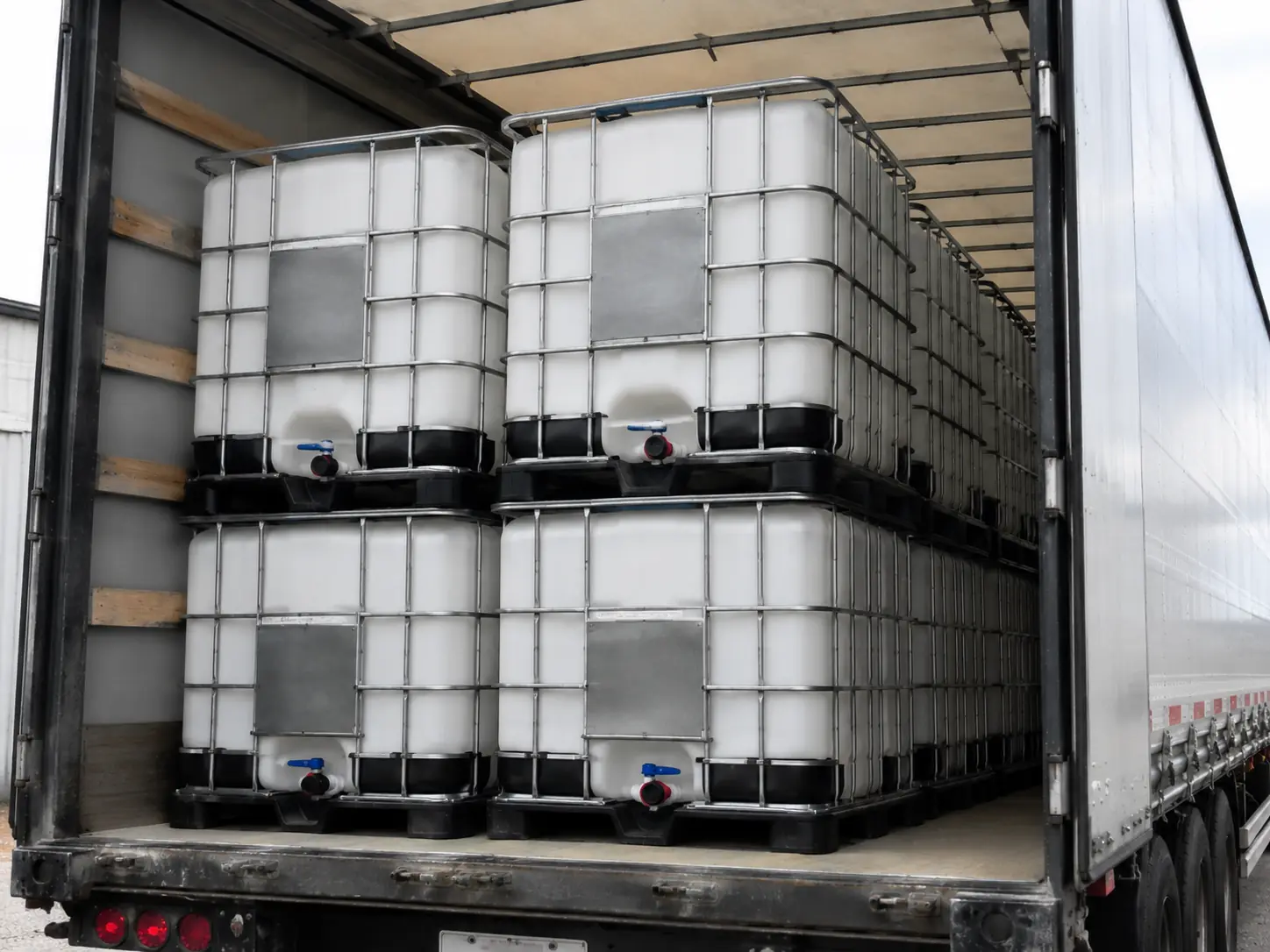
A 330-gallon tote holds twenty percent more than a 275, occupies exactly the same 48 × 40 inch footprint, and costs the same to freight. On paper it is strictly better. In the used market it frequently sells for less per gallon, and the reason is entirely about buildings.
Seven inches
That is the whole difference: 53 inches tall against 46. Everything else about the two containers is the same.
Seven inches is nothing until it is everything. A racking bay set at 54 inches of clear height takes a 275 comfortably and will not take a 330 with a beam above it. An older freight lift in a Brooklyn or Manhattan building has a fixed car height that was decided in 1974. A dock door with a low header, a mezzanine, a basement store with pipework — all of them are pass/fail on those seven inches.
The result is that a meaningful slice of the buyer base simply cannot take 330s, and they know it. So 330s move slower, sit longer, and periodically get discounted to clear space.
What the arithmetic looks like
- Forty 275s on a trailer: 11,000 gallons.
- Forty 330s on the same trailer: 13,200 gallons.
- Same truck, same driver, same fuel, same emissions — 2,200 more gallons delivered.
- Per pallet position in a warehouse, 20% more product for identical rent.
Over a year of regular shipments that is a genuine reduction in cost and carbon per gallon moved, and it is available for the price of measuring a doorway.
Measure the tightest point, not the door
The constraint is almost never the loading dock. It is a beam halfway down an aisle, the underside of a sprinkler main, or the freight lift. Walk the actual route the container takes from the truck to its final position and measure the lowest thing on it.
The one case where the 330 is wrong
Dense product. A full 330 of water is already about 2,902 lb against a typical 3,000 lb gross-mass marking. Anything heavier than water and you cannot fill it — you are shipping air in a taller box, and you should have bought the 275.
The crossover is roughly at a specific gravity of 1.03. Above that, the mass limit bites before the volume does, and the whole advantage evaporates.
How to play it
If your product is at or below the density of water and you have measured every clear height on the route: ask specifically for 330s and ask whether there is a price on aged stock. We hold them longer than we would like and we would rather they were working.
If your site cannot take the height, do not force it. An aborted delivery costs more than the capacity saves, and a container that has to be stored outside because it will not fit the rack is a container that will be UV-degraded in two summers.
Teddy Grant is the buyer at IBC Tote Recycling NY in Astoria, Queens. We publish the figures we work from — if you think one of them is wrong, tell us.