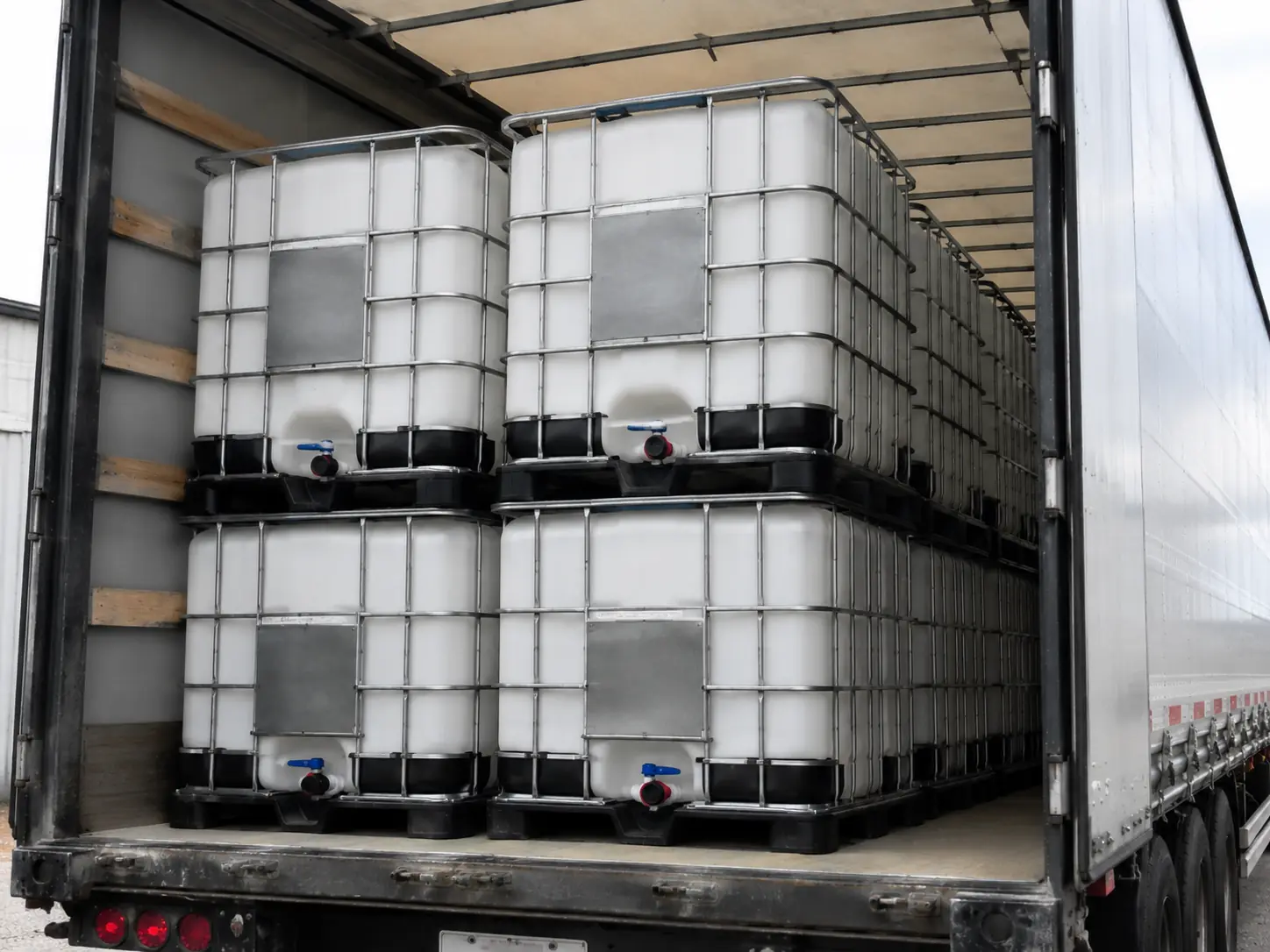
The most expensive thing that happens in this trade is discovering a lapsed retest on the morning a truck is loaded. The container is fine. The product is fine. The shipment is not going anywhere.
The intervals
Under 49 CFR 180.352, a composite IBC in dangerous-goods service needs:
- Every 2.5 years — a leakproofness test and an external visual inspection of the body, closures and structural equipment.
- Every 5 years — a full periodic inspection including internal examination, in addition to the leakproofness test.
- After any repair, rebottling or remanufacture — requalification against the design type before the container returns to service.
The clock starts at the date of manufacture, which is the four-digit month-and-year block in the UN marking. Not the date you bought it. Not the date it was last washed.
Where fleets lose containers
<strong>Nobody owns the calendar.</strong> Purchasing bought the containers, operations uses them, and compliance finds out when something fails an inspection. The fix is boring: one person, one spreadsheet, one recurring reminder.
<strong>The dates are staggered.</strong> A fleet bought over three years has retest dates scattered across three years, which is administratively far worse than a single annual event. We increasingly see operators deliberately batch requalification even when a few containers go in early, purely to make the schedule manageable.
<strong>The plate gets painted over.</strong> Or falls off, or corrodes. A container whose retest history is unreadable is, practically speaking, out of dangerous-goods service until it is requalified.
The thirty-minute job that prevents all of this
The day a container arrives, photograph the plate, read the manufacture date, and put two entries in a shared calendar: one at 2.4 years and one at 4.9 years, both with the serial number in the title. Do it at intake and it is thirty seconds per container. Do it later and it never happens.
What we can and cannot do for you
We requalify containers — that is a core part of the reconditioning line, and turnaround on customer-owned units is five to eight working days. Send us photographs of the plates and we will tell you which containers are current, which are due and which have quietly dropped out of service.
What we do not do is track your dates for you, unless you are on a fleet management agreement. If you want that, it is included there along with the serialised tagging and the monthly report.
The one thing people get wrong about the plate
An original design-type marking says the container was built to an approved and tested design. It says nothing whatsoever about whether this specific unit has been tested in the last two and a half years. Those are two different marks, and buyers routinely see a crisp original stamp and assume they are covered.
Look for the retest marking, which is separate and usually adjacent. Absent on a container older than 2.5 years means non-regulated use only, which is fine — it just needs to be priced and used accordingly.
Priya Raghunathan is the compliance & documentation at IBC Tote Recycling NY in Astoria, Queens. We publish the figures we work from — if you think one of them is wrong, tell us.