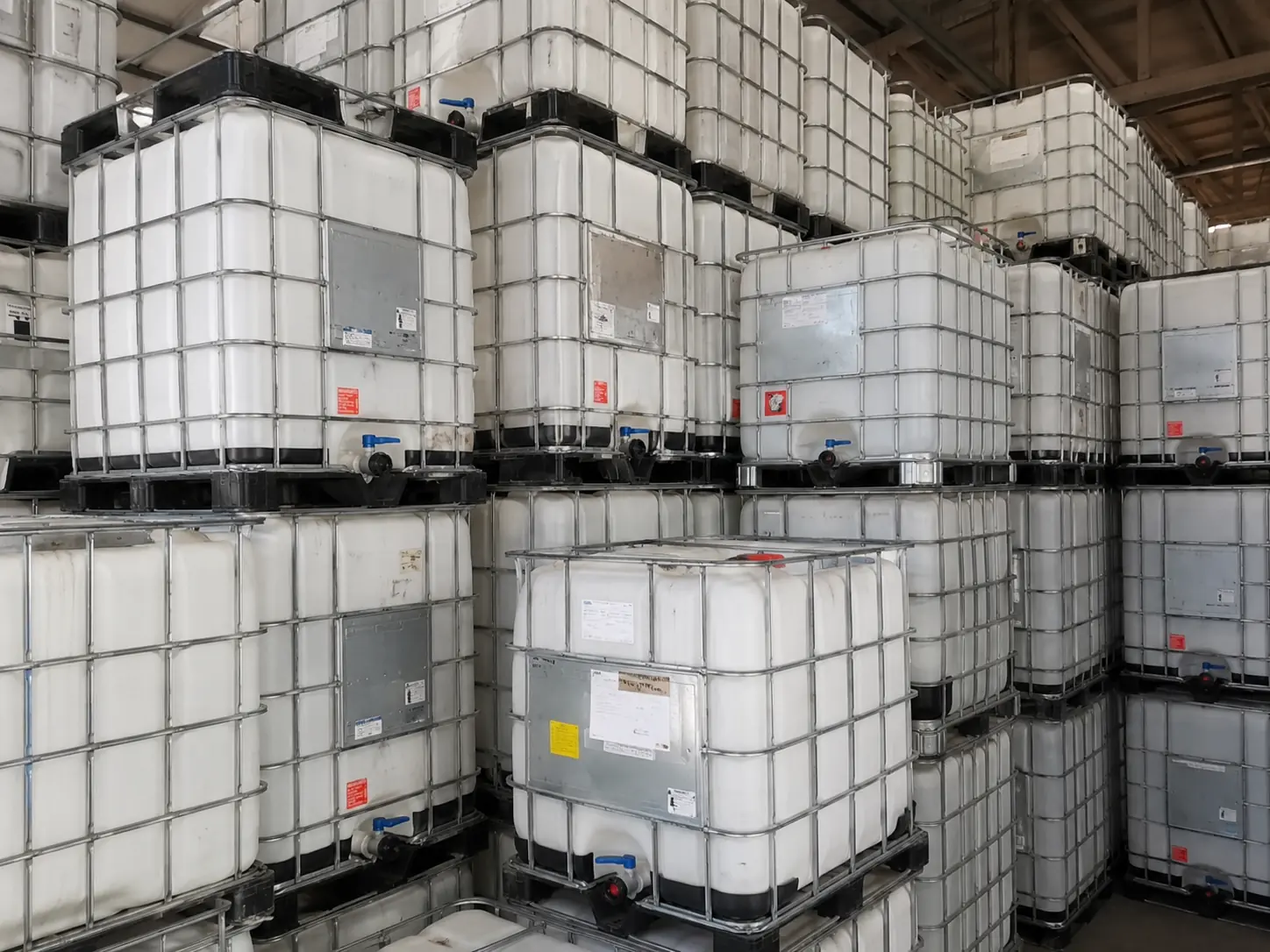
Sizes & specs · Detail
Steel, composite or wood?
Specify a base
Replies within one business day · Fields marked * are required
| Steel | Composite | Wood | |
|---|---|---|---|
| Tare contribution (275 gal) | ~130 lb total | ~120 lb total | ~145 lb total |
| Durability | Highest | High | Moderate |
| Wet-yard performance | Rusts slowly, keeps working | Unaffected | Absorbs, swells, rots |
| Spill absorption | None | None | Absorbs — a contamination issue |
| Export (ISPM 15) | Exempt | Exempt | Heat treatment and stamp required |
| Food suitability | Acceptable | Preferred | Discouraged |
| Forklift entry | Four-way | Four-way | Usually four-way |
| Repairable | Weldable | Replaceable only | Replaceable, often not worth it |
| Resale value | Highest | High | Lowest |
| End of life | Steel recycling | HDPE recycling | Biomass or landfill |
Why wood is a false economy in this application
A wooden pallet under a drum is fine. Under an IBC it has a specific problem: the container sits on it for years, outdoors as often as not, and any spill from the valve above lands directly on it. Wood absorbs that spill and holds it. You now have a piece of contaminated packaging that cannot be cleaned, cannot be certified for food work, and will fail an inspection on residue grounds even though the bottle above it is spotless.
It also determines resale value more than most sellers expect. When we grade an incoming load, a wooden base in poor condition can drop a tote a full grade — not because the container is unsound, but because we will have to replace the base before it goes back out.
The export question
ISPM 15 requires solid wood packaging crossing international borders to be heat-treated or fumigated and stamped. That is an ongoing cost and an ongoing compliance risk on every shipment. Composite and steel bases are outside the scope entirely, and for anyone shipping across a border the decision is effectively made for them.
When composite wins outright
Food and beverage work, cold and wet environments, anywhere weight matters, and any export lane. The only real argument against it is that a badly damaged composite base cannot be repaired — it is replaced. Steel can be welded back into service, which is why heavy industrial users still prefer it.
Which IBC pallet base is best?
Steel for durability and resale value, composite for food work and export, wood only when price is the deciding factor and the tote stays dry and domestic. Steel is the default for a reason.
Do wooden IBC pallets need ISPM 15 heat treatment for export?
Yes. Solid wood packaging crossing international borders must be heat-treated or fumigated and stamped accordingly. Composite and steel bases sidestep the requirement entirely, which is why exporters overwhelmingly specify them.
Can the pallet base be replaced?
On most designs, yes — the base is bolted or welded and can be swapped during reconditioning. It is a routine repair and far cheaper than scrapping a sound bottle and cage.
Specifying a fleet?
Tell us the environment and the lanes it runs. Base material is a five-minute decision that determines how the containers look in three years.