Services · Tote Recycling
IBC Tote Recycling
Start this service
Replies within one business day · Fields marked * are required
How it runs
4 steps, start to finish.
When a tote genuinely cannot be reused, we separate it into clean HDPE, steel and hardware streams instead of sending it to a landfill.
- 01
Triage first
Every incoming tote gets inspected for reuse before anyone reaches for a saw. Roughly seven in ten are saved.
- 02
Decontaminate
Rinsate is captured, characterised and sent to a permitted treatment facility. We never granulate a dirty bottle.
- 03
Separate
Bottle out of cage, valve out of bottle, gasket out of valve. Mixed material is worthless material.
- 04
Granulate and mill
HDPE to regrind, steel to the mill, and a weight ticket back to you for your waste reporting.
Why we argue against this service
Recycling is the fourth rung on our reuse ladder, not the first. Granulating a sound tote recovers the material but throws away the manufacturing energy already invested in it — you save around 46 kg CO₂e where reuse would have saved 125 kg. When somebody calls asking us to recycle a pallet of totes, our first question is always whether they have actually failed inspection.
What separation looks like
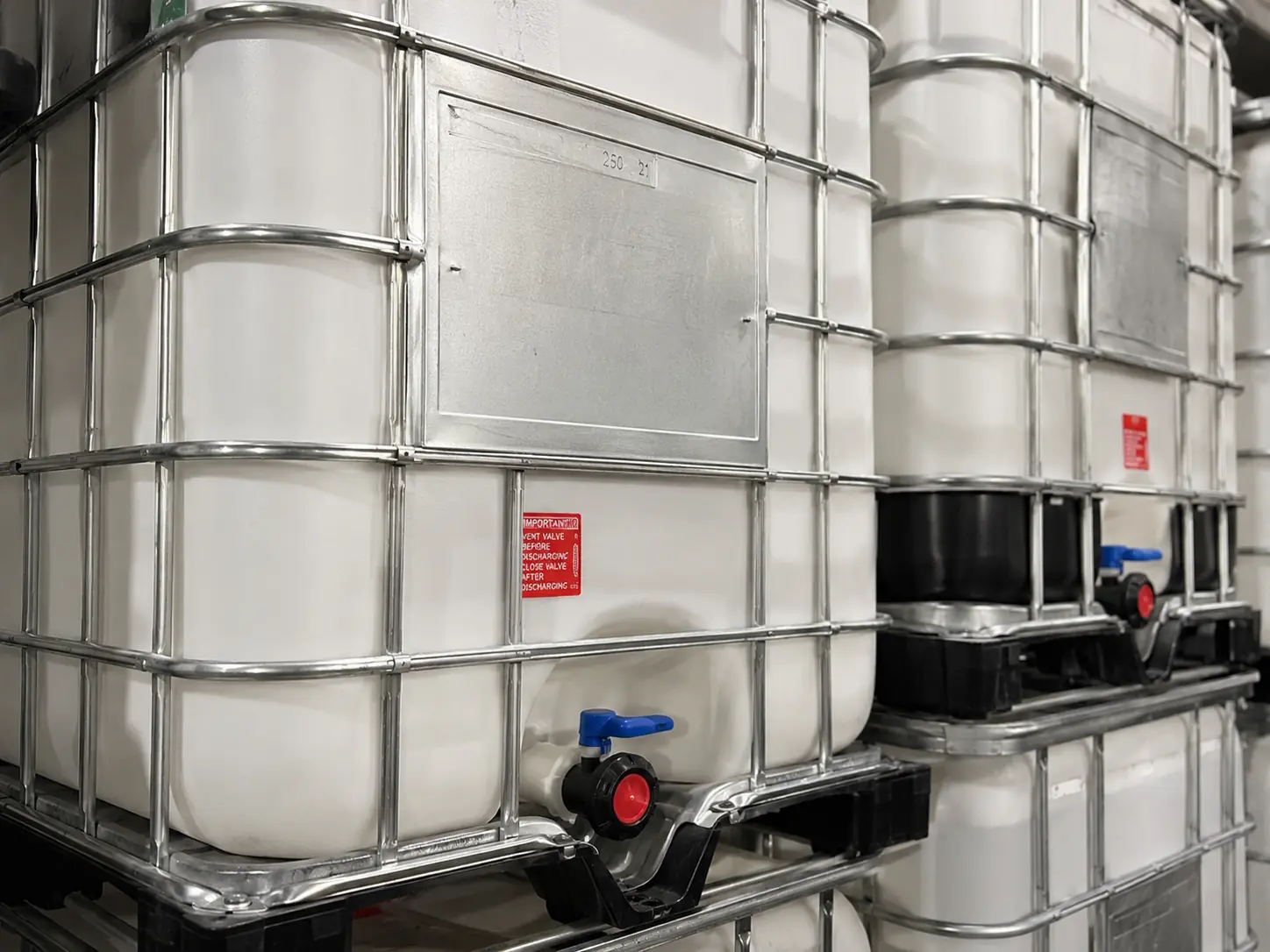
Mixed material is worthless material, so the strip-down is granular: bottle out of cage, valve out of bottle, gasket out of valve, steel pallet frame off the base. HDPE bottles that have been properly rinsed produce a clean, high-value regrind that goes into non-food durable goods. The galvanised cage and frame go to a steel mill, where steel's near-infinite recyclability finally works in everyone's favour.
The rinsate question
Nobody talks about this part, and it is the part that separates a compliant yard from a fly-tipping operation. Wash water carries the hazard profile of whatever it rinsed. Ours is captured, characterised and sent to a permitted treatment facility. We never granulate a dirty bottle, and we never put rinsate down a drain.
Documentation
Weight tickets by material stream and a recovery statement you can put straight into waste reporting. If you need the figures in avoided-emissions terms instead of tonnage, the impact calculator covers the method.
Where this service runs
Seventy-five miles out of Astoria.
Lead times shorten the closer you are. Inside the five boroughs this is usually a same-week job; the outer counties consolidate into full loads.
0–25 minutes
Astoria & Queens
Same day or next day
25–45 minutes
Brooklyn
Same week, usually 48 hours
20–40 minutes
Manhattan
Same week, scheduled off-peak
20–35 minutes
The Bronx
Same week
45–70 minutes
Staten Island
Weekly scheduled run
45–110 minutes
Long Island
2–4 days
35–70 minutes
Westchester
2–4 days
35–75 minutes
Northern New Jersey
2–4 days
Frequently asked questions
Tote Recycling, answered.
The five things people ask us most before starting this service.
Why do you argue against recycling a sound tote?
Because granulation recovers the material but throws away the manufacturing energy already invested in it. Reuse avoids around 125 kg CO₂e per tote; recycling saves roughly 46.
What happens to each part of the container?
Bottle out of cage, valve out of bottle, gasket out of valve, steel frame off the base. Rinsed HDPE becomes clean, high-value regrind; the galvanised cage and frame go to a steel mill.
How much of an IBC tote is actually recovered?
Around 94% by mass, provided the container is stripped down properly and the bottle was rinsed before it reached us. Mixed material is worthless material.
What happens to the wash water?
Rinsate carries the hazard profile of whatever it rinsed, so ours is captured, characterised and sent to a permitted treatment facility. We never put rinsate down a drain.
What documentation do I receive?
Weight tickets broken down by material stream and a recovery statement you can put straight into waste reporting, in tonnage or in avoided-emissions terms.
Ready to start tote recycling?
Use the floating button on any page, or fill in the form at the top of this one. Either way you get a written answer within one business day.