Knowledge · Reference

Grade A, B, C and rebottled — what each actually means.

Which grade do you need?

Replies within one business day · Fields marked * are required

US or Canada only, 10 digits — e.g. (718) 555-0142

US ZIP (11105) or Canadian (M5V 2T6)

No phone calls — we're an email-first yard, so you get everything in writing. Typical reply time is under one business day. We never sell or share your details; see our privacy policy.

At a glance

The comparison

Five grades, side by side.

Read down the column that matches your job, not the one that matches your instincts about what looks clean.

Grade comparison — condition, cleaning, documentation and price
GradeIn one linePrice bandTransport-legal?Food contact?
Grade A — food-grade eligibleOne prior life, and it was food.Top of the used market — roughly 55–70% of newYes, with current retestsYes
Grade A — industrialCosmetically excellent, industrial history.Roughly 40–55% of newYes, with current retestsNo
Grade B — general purposeSound, tested, and honestly scuffed.Roughly 25–40% of newNon-regulated onlyNo
Grade C — storage and static useCheap, honest, and staying put.Roughly 12–25% of newNoNo
RebottledA brand-new bottle in a reclaimed cage.Roughly 60–80% of new — and the greenest option that still gives you a new bottleYes, with current retestsYes
Detail

Grade by grade

What we check, and what we accept.

Grade A

Grade A — food-grade eligible

Top of the used market — roughly 55–70% of new

One prior life, and it was food.

Bottle

Single-trip bottle, no discoloration, no ghosting, no permeation odour. Wall thickness within 5% of new at the four measured points.

Cage & base

No welds broken, no more than surface oxidation, all four feet true. Pallet base clean and unpainted.

Cleaning

Triple hot rinse with potable water, food-safe detergent, final rinse tested to below 5 ppm TOC, air-dried under filtered air, sealed immediately.

Documentation

Prior-contents declaration from the original filler, wash certificate, leakproofness test record, photographs of the interior.

Good for

  • Food, beverage and flavour ingredients
  • Cosmetic and personal-care bases
  • Potable water storage
  • Pharma-adjacent and nutraceutical work

Not for

  • Anything where you need a brand-new bottle for audit reasons

Grade A-IND

Grade A — industrial

Roughly 40–55% of new

Cosmetically excellent, industrial history.

Bottle

Clear to lightly tinted, no cracks, no bulging, valve seat unmarked. May carry a faint residual odour from the prior product.

Cage & base

Straight, fully welded, minimal rust bloom. Original UN plate legible and attached.

Cleaning

Caustic wash, hot rinse, dried and capped. Interior photographed.

Documentation

Prior-contents declaration, wash record, UN plate photo.

Good for

  • Solvents, coatings and resins
  • Industrial cleaning chemistry
  • Liquid fertiliser and ag chemistry
  • Waste consolidation where appearance matters

Not for

  • Food contact
  • Anything requiring a virgin bottle

Grade B

Grade B — general purpose

Roughly 25–40% of new

Sound, tested, and honestly scuffed.

Bottle

Structurally sound and leak-tested. Expect staining, cloudiness, scuffing or a residual smell. No cracks, no repairs.

Cage & base

Functional. Some rust, possibly a repaired weld, maybe a replacement foot. Stacks safely.

Cleaning

Rinsed and drained. Not certified clean — assume you will wash to your own standard.

Documentation

Prior-contents declaration and leak test. UN plate may be missing or illegible.

Good for

  • Non-regulated bulk liquids
  • Water storage on site
  • Waste and rinsate collection
  • Construction, landscaping and agriculture

Not for

  • Dangerous goods transport
  • Food contact
  • Anything where cosmetics matter

Grade C

Grade C — storage and static use

Roughly 12–25% of new

Cheap, honest, and staying put.

Bottle

Holds liquid but has cosmetic or minor structural faults — heavy staining, a repaired weep, a cracked outlet collar we've replaced.

Cage & base

Heavier corrosion or a visible repair. Not for stacking loaded.

Cleaning

Emptied and drained only.

Documentation

Prior-contents declaration. Sold explicitly as non-transport.

Good for

  • Static water storage
  • Rainwater capture
  • Ballast and site containment
  • Upcycling projects

Not for

  • Any transport at all
  • Stacking when full
  • Regulated product

Grade RB

Rebottled

Roughly 60–80% of new — and the greenest option that still gives you a new bottle

A brand-new bottle in a reclaimed cage.

Bottle

Factory-fresh HDPE bottle, never filled. Virgin resin, new gasket, new valve, new lid.

Cage & base

Reclaimed cage and pallet, inspected, straightened, re-welded where needed, re-plated with a fresh UN marking under our approval.

Cleaning

Not applicable — the bottle has never held product.

Documentation

New UN design-type marking, build record, our own test certificate.

Good for

  • Dangerous goods transport on a budget
  • Food-grade work where a virgin bottle is mandatory
  • Anywhere a Grade A is unavailable at volume

Not for

  • Buyers who need the cage to be new as well
Choosing

The decision, in four questions

1. Does it move on a public road with regulated product in it?

If yes, you need a valid UN marking with current retest dates — Grade A or rebottled. Nothing else will do, and no amount of cleaning changes that. If no, skip straight to question three.

2. Is there food, drink, cosmetic or potable water contact?

If yes, you need a documented food-only history or a virgin bottle. Grade A food-grade or rebottled. A tote that held industrial chemistry can never come back to food service — permeation is permanent.

3. Does anyone outside your business see it?

If yes, Grade A industrial is worth the premium purely on appearance. If no, Grade B does exactly the same job for eighty dollars less and the staining is cosmetic.

4. Does it ever leave the spot you put it in?

If no, Grade C. Static water storage, rainwater, ballast, containment, upcycling. At $95 it is not a compromise — it is the correct specification, and buying anything more is wasted money.

The most common expensive mistake

Buying Grade A for a job Grade B would do. We talk people down from this several times a week. The second most common is the opposite and much worse: buying Grade B for a job that legally requires a current mark. One of those costs money; the other costs a fine and a stopped shipment.

Holding a supplier to a grade

Because grading is not standardised, the only protection you have is a written definition. Ask any yard — including us — for three things before you commit to volume: the prior-contents declaration, the leakproofness test record keyed to the serial, and a photograph of the interior. A supplier who cannot produce all three is not grading, they are guessing.
Questions
Are IBC tote grades an industry standard?

No, and that is the single most useful thing to know about them. Grading is each yard's own vocabulary, so a Grade A from one supplier can be another supplier's Grade B. Only a written definition protects you.

What is the real difference between Grade A and Grade B?

Mostly cosmetic condition and cage straightness rather than integrity. Both carry an intact UN mark and pass the same leakproofness test. A Grade B will show staining, scuffing or a slightly tired cage that a Grade A will not.

What is Grade C actually good for?

Static, non-transport, non-potable use on your own site — rain harvesting, ballast, aquaponics, wash water. For those jobs a Grade C at a fifth of the price is not a compromise, it is the correct specification.

Does a cloudy bottle mean the tote is dirty?

No. Cloudiness is permeation and stress whitening in the polymer wall, not surface soil, and no wash cycle will remove it. It affects appearance and grade, not whether the container holds product.

What should I ask a supplier before committing to volume?

Three things: the prior-contents declaration, the leakproofness test record keyed to the serial, and a photograph of the interior. A supplier who cannot produce all three is not grading, they are guessing.

Describe the job and we'll name the grade.

Including when the honest answer is the cheaper one. We buy containers back at end of life, so keeping them in circulation is how our business works.

See the catalog
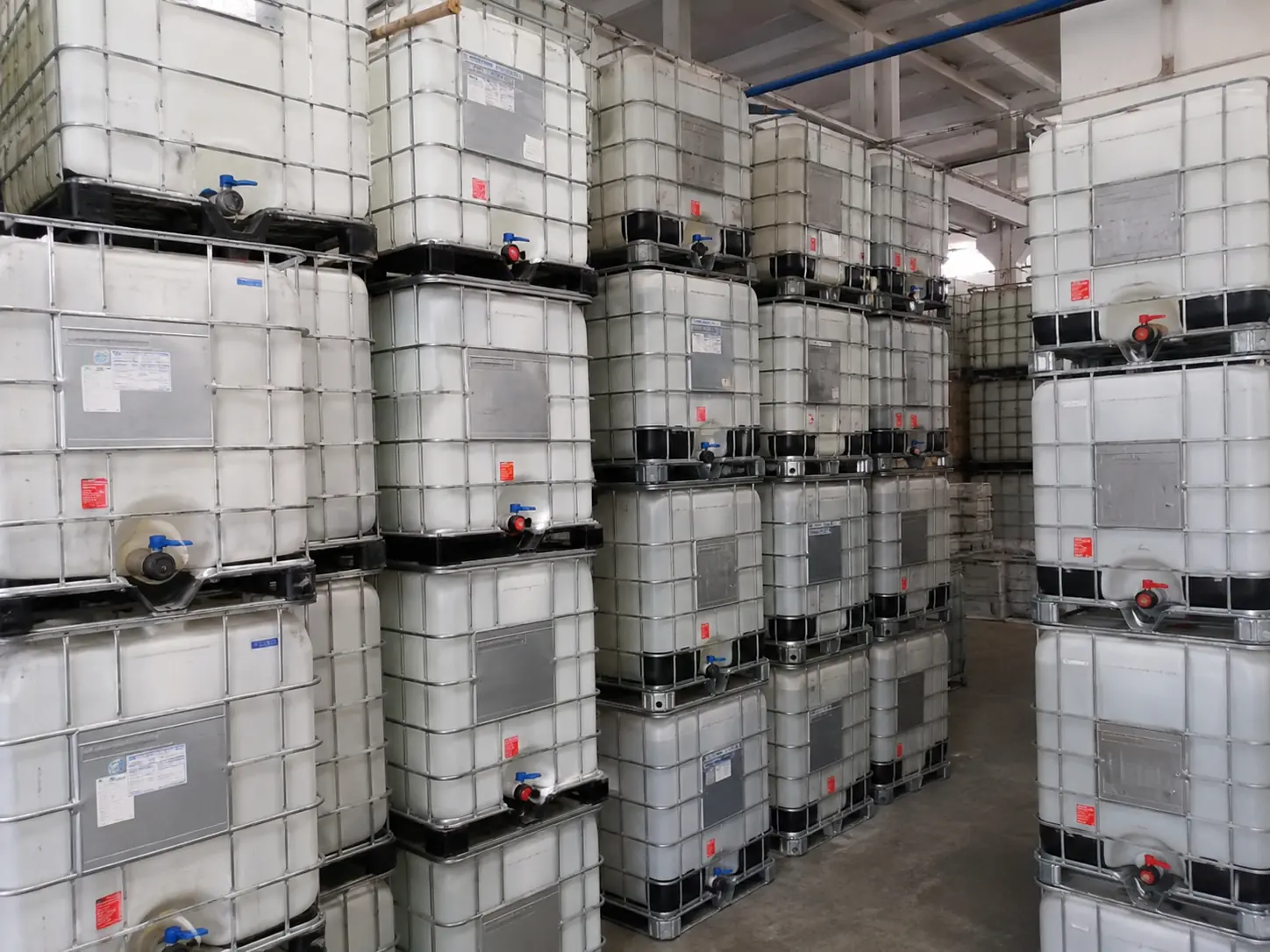
Reconditioned IBC totes stacked three high along a warehouse aisle, cages and discharge valves visible
Graded stock, stacked three high