Knowledge · Project guide
Rainwater harvesting with an IBC tote.
Buy a rain harvesting kit
Replies within one business day · Fields marked * are required
Seven steps
Building it properly.
- 01
Start with a clean container
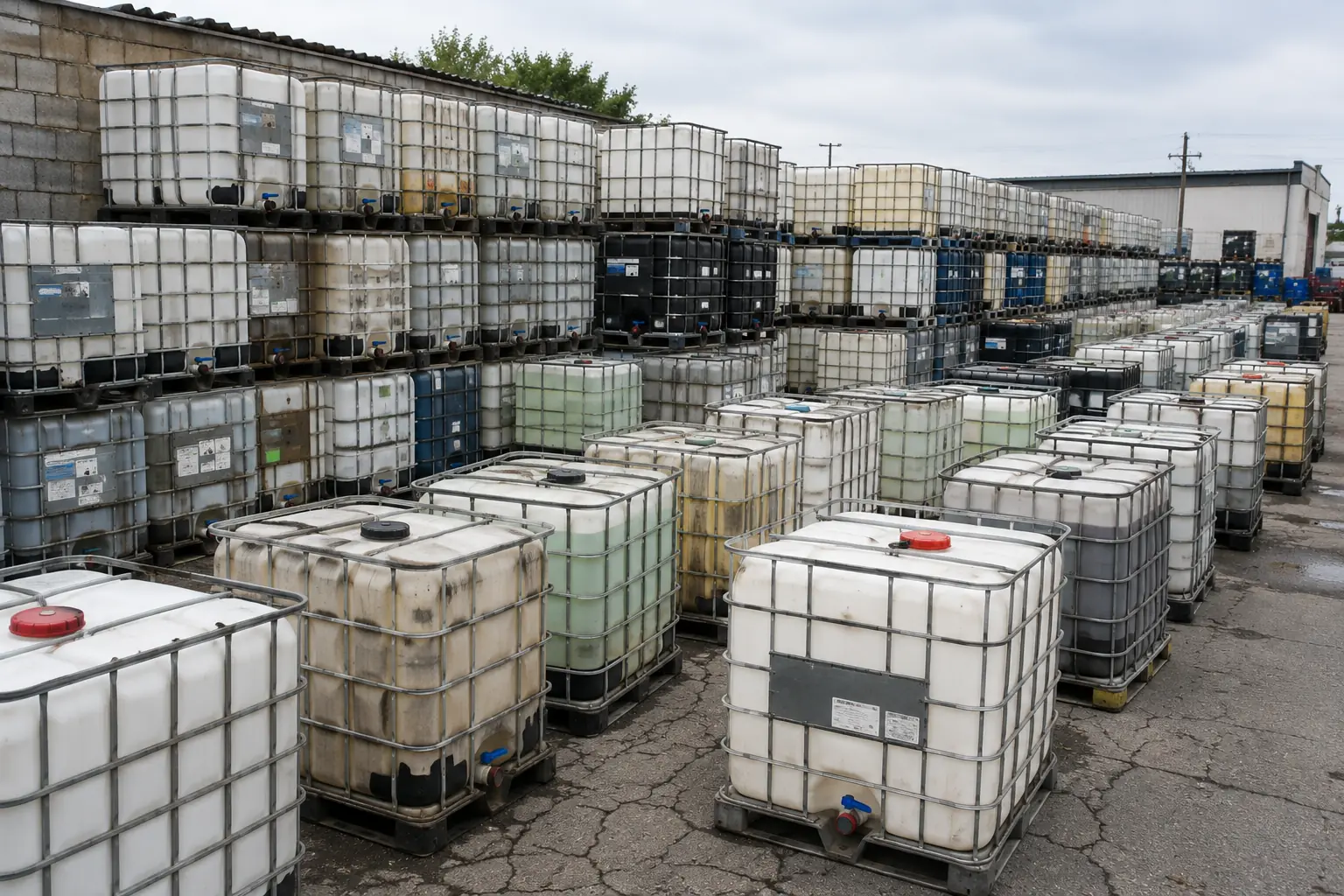
Food-grade or documented clean history only. An industrial tote will leach permeated chemistry into water you then put on food crops. This is not caution, it is the whole basis of the project.
- 02
Site it level, high and shaded
A full 275 is 2,425 lb — put it on compacted hardcore or slabs, not soil. Raise it 18–24 inches on a stand or blocks so gravity gives you usable pressure at the tap. Shade it or paint it: UV is what kills these installations.
- 03
Screen the inlet
Fine mesh over the inlet, always. It keeps leaves and grit out and — more importantly in a New York summer — stops mosquitoes breeding. An unscreened tote is a larvae farm by July.
- 04
Fit a first-flush diverter
The first few gallons off a roof carry the bird droppings, grit, pollen and whatever the last dry fortnight deposited. A diverter dumps that before the clean water reaches the tank. It is a $30 part that determines the water quality of the whole system.
- 05
Plumb the overflow properly
It will overflow — plan where. Route it to a permeable surface, a soakaway or a rain garden, well away from foundations. An overflow that discharges against a wall is how you turn a green project into a damp problem.
- 06
Fit a real tap
The 2-inch outlet valve takes a garden-hose adapter for a few dollars. Put it somewhere you can get a watering can under without kneeling in mud.
- 07
Winterise before the first hard freeze
Water expands when it freezes and will split the bottle or bulge the cage. Drain below a third by late November, or fit a drain you can reach in February.
Sizing
How much roof do you need?
The formula is 0.6 gallons per square foot of roof per inch of rainfall, after allowing for losses to splash, evaporation and the first-flush diversion.
| Roof area | Per 1 in of rain | Per average month | Per year | Totes to store a month |
|---|---|---|---|---|
| 200 sq ft (shed) | 120 gal | 470 gal | 5,640 gal | 2 |
| 400 sq ft (garage) | 240 gal | 940 gal | 11,280 gal | 3–4 |
| 600 sq ft (small house) | 360 gal | 1,410 gal | 16,920 gal | 5 |
| 1,000 sq ft | 600 gal | 2,350 gal | 28,200 gal | 8–9 |
| 2,500 sq ft (commercial) | 1,500 gal | 5,875 gal | 70,500 gal | 21 |
Storing a whole month is almost never the goal. Most people size for a dry fortnight in July and let the rest overflow — one or two totes on a domestic roof is the sweet spot, and the third one rarely earns its space.
Mosquitoes, seriously
This is the requirement people skip and then regret. Any standing water in New York between June and September is a breeding site. Screen the inlet and the overflow with fine mesh, keep the lid sealed, and if the water will stand for more than a couple of weeks, use a Bti dunk — a biological larvicide that is harmless to plants, pets and people. It is a few dollars and it is the difference between a water butt and a public nuisance.
UV is what actually kills these systems
Natural HDPE in full sun goes chalky, then brittle, then splits along a stress line — typically in year three, typically while full, typically at the worst possible moment. Paint the outside with an exterior masonry or plastic-compatible paint in a dark opaque colour, wrap it, or shade it. The same step suppresses algae, so there is no reason not to.
Linking multiple totes
Connect them at the base with 2-inch hose and camlocks so they equalise and fill as one volume, and take a single overflow off the last in the chain. Do not link them at the top: you get the storage of one tote and the plumbing of three. All the fittings you need are standard — valves, adapters and camlocks are a few dollars each.
What the water is good for
Gardens and allotments, washing vehicles and tools, flushing, topping up ponds, mixing concrete, dust suppression, and — with a filter and a pump — pressure washing. It is soft water, so it is actually better than mains for most plants and for washing glass.
It is not drinking water, it is not for filling a paddling pool, and it should not go anywhere near food preparation. That holds even with a spotless food-grade container, because the contamination comes from the roof rather than the tank.
Is rainwater harvesting legal in New York?
Yes. New York State permits residential rainwater collection, and New York City actively encourages it — the DEP has run rain barrel giveaway and stormwater-reduction programmes for years. The practical requirements are that it stays non-potable, that it is screened against mosquitoes, and that the overflow does not create a nuisance for a neighbour.
How much water can I actually collect?
Roughly 0.6 gallons per square foot of roof per inch of rain, after losses. A 600 sq ft roof in a 1-inch rainfall yields about 360 gallons — which fills a 275-gallon tote and overflows. New York City averages around 47 inches a year, so that same roof sheds roughly 17,000 gallons annually.
Can I drink it?
No. Treat harvested rainwater as non-potable regardless of how clean the container is. Roof runoff carries particulates, bird droppings and whatever the roofing material sheds. It is excellent for gardens, washing and flushing, and it is not drinking water.
Do I need a food-grade tote for a vegetable garden?
Yes, or at minimum a documented clean-history container. Water sitting in a tote that held industrial chemistry picks up permeated compounds from the wall and delivers them to your soil. We only build rain harvesters from containers whose history we can prove.
How do I stop it going green?
Light is the problem — HDPE is translucent enough for algae to establish within a fortnight. Paint the outside a dark opaque colour, wrap it, or build a simple lean-to. This also solves the UV degradation problem, so it is two jobs for one afternoon.
Want it built rather than bought in parts?
We assemble rain harvesting kits from clean-history containers — diverter, screen, overflow and tap fitted. From $145.