Knowledge · Comparison
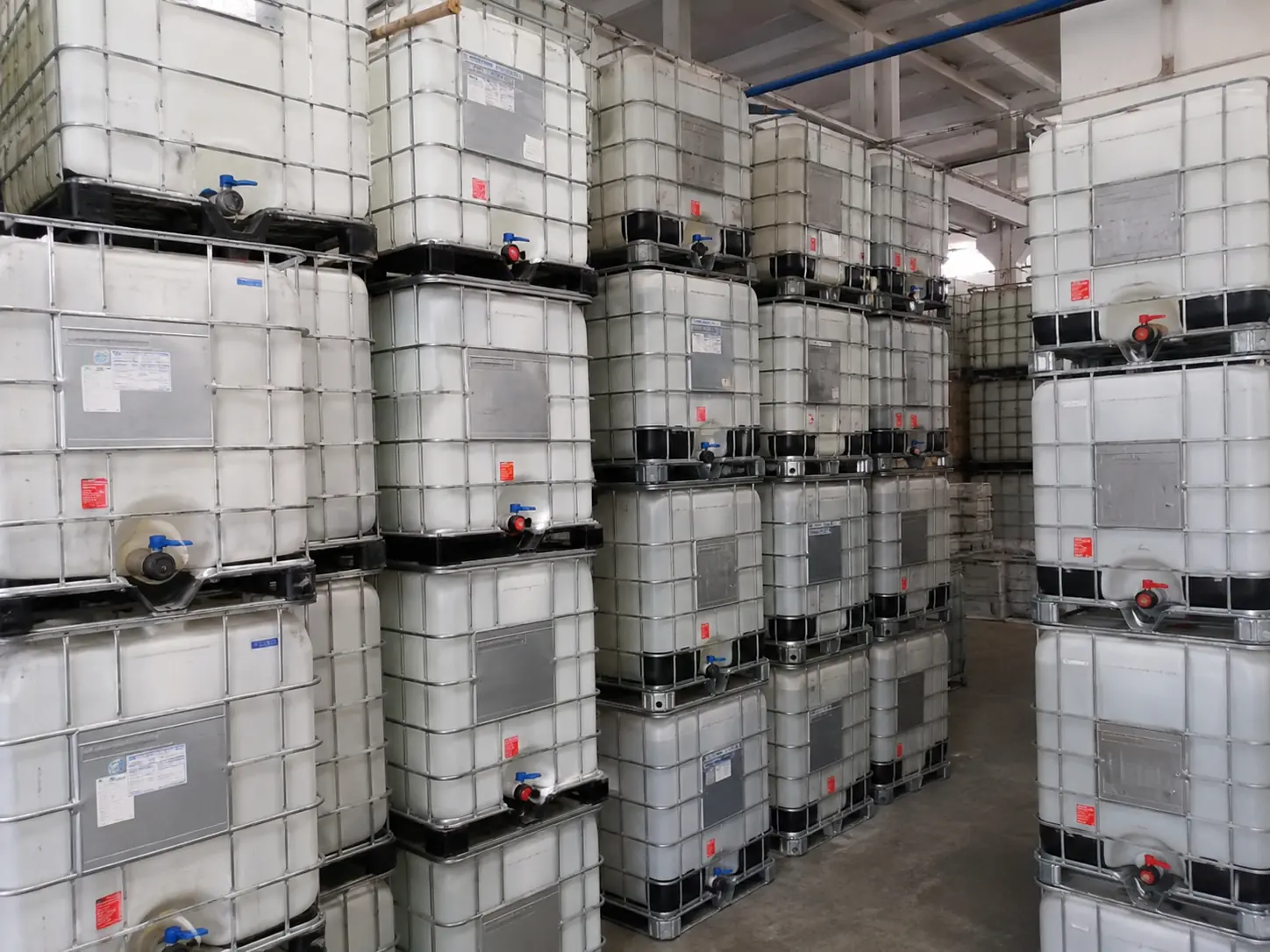
One tote, or five drums?
Not sure? Describe the site.
Replies within one business day · Fields marked * are required
| One 275 gal tote | Five 55 gal drums | |
|---|---|---|
| Capacity | 275 gal | 275 gal |
| Used purchase cost | ~$150 (Grade B) | ~$175 (5 × $35) |
| Cost per gallon of capacity | $0.55 | $0.64 |
| Floor footprint | 13.3 sq ft | ~12 sq ft plus handling clearance |
| Filled weight (water) | 2,425 lb in one lift | 5 × 497 lb |
| Handling equipment | Forklift or pallet jack required | Drum dolly, two people |
| Closures to seal | 1 valve, 1 lid | 10 bungs |
| Decanting | Gravity or pump from the valve | Drum pump or tip with a cradle |
| Cleaning burden | One interior | Five interiors |
| Worst-case single spill | 275 gal | 55 gal |
| Stackable loaded | 2–3 high, per plate | Not without a rack |
| Splitting across sites | Awkward | Trivial |
| End-of-life value | $18–$95 | $3–$9 each |
The argument for the tote
Cost per gallon, closures and labour. Ten bungs is ten chances to get a gasket wrong, ten torque settings nobody checks, and ten places for a weep to start. One valve and one lid is a materially simpler system to run correctly.
Decanting is the other big one. A tote discharges under gravity from a 2-inch valve at a usable height. Getting product out of a drum means either a drum pump — which is one more thing to clean between products — or tipping 497 pounds in a cradle, which is where drum-handling injuries come from.
The argument for drums, which is better than people admit
Site reality. A full tote is a tonne on a pallet. If there is no forklift, no dock and no pallet jack, that container will sit exactly where the driver put it forever. This is the single most common reason a tote purchase goes wrong, and it is entirely predictable in advance.
Viscosity. Anything that will not flow out of a 2-inch valve — pastes, waxes, heavy resins, anything that sets — wants an open-head drum you can scrape.
Batch splitting. Five drums go to five places. One tote goes to one place. If you are distributing rather than consuming, that settles it.
Spill exposure. A drum failure is a 55-gallon incident; a tote failure is a 275-gallon one. Where secondary containment is limited or the product is genuinely nasty, splitting the risk is a legitimate engineering choice rather than a timid one.
The rule we actually use
Ask what happens on the worst day. If the answer to “how does this get moved when the forklift is broken?” is “it doesn't”, buy drums — however much better the tote looks on the spreadsheet.
End of life
Totes are worth substantially more used, which shows up on the total cost of ownership rather than the purchase order. We pay $18–$95 for an empty tote and $3–$9 for an empty drum. Over a fleet, that gap is real money — and it is also why totes get reused and drums more often get scrapped. We buy both; see used drums and selling your containers.
How many 55-gallon drums equal one IBC tote?
Five. A 275-gallon tote holds 275 gallons; five drums hold 275. The tote occupies about 13 square feet of floor; five drums occupy roughly 12 on the floor but need clearance around them to handle, so in practice the tote wins on space.
Which is cheaper per gallon?
The tote, decisively. A used 275-gallon tote at $150 works out at about $0.55 per gallon of capacity. Five used 55-gallon drums at $35 each is $175, or $0.64 per gallon — and you have five valves, five lids and five things to clean instead of one.
Which is safer?
Depends on the failure you are worried about. A drum failure spills 55 gallons; a tote failure spills 275. But a tote has one closure to get wrong instead of ten, and it does not need to be manually handled. Site conditions decide this, not the container.
Describe the site and the product.
Forklift or not, dock or not, viscosity, and where it has to go. We'll tell you which container the job actually wants — we sell both.