Astoria, Queens · Serving the whole metro since 2009
The tote you need
already exists.
Buying, selling, or clearing the yard?
One form covers all three · Reply in one business day
We buy, wash, repair, re-certify and resell used IBC totes across New York — and we recycle the ones that are genuinely finished. Every container we put back into service is 125 kg of CO₂e that never happens, 17 kg of virgin HDPE never moulded and 42 kg of steel never smelted.
Astoria, Queens
Six thousand square feet of containers that didn’t get shredded.
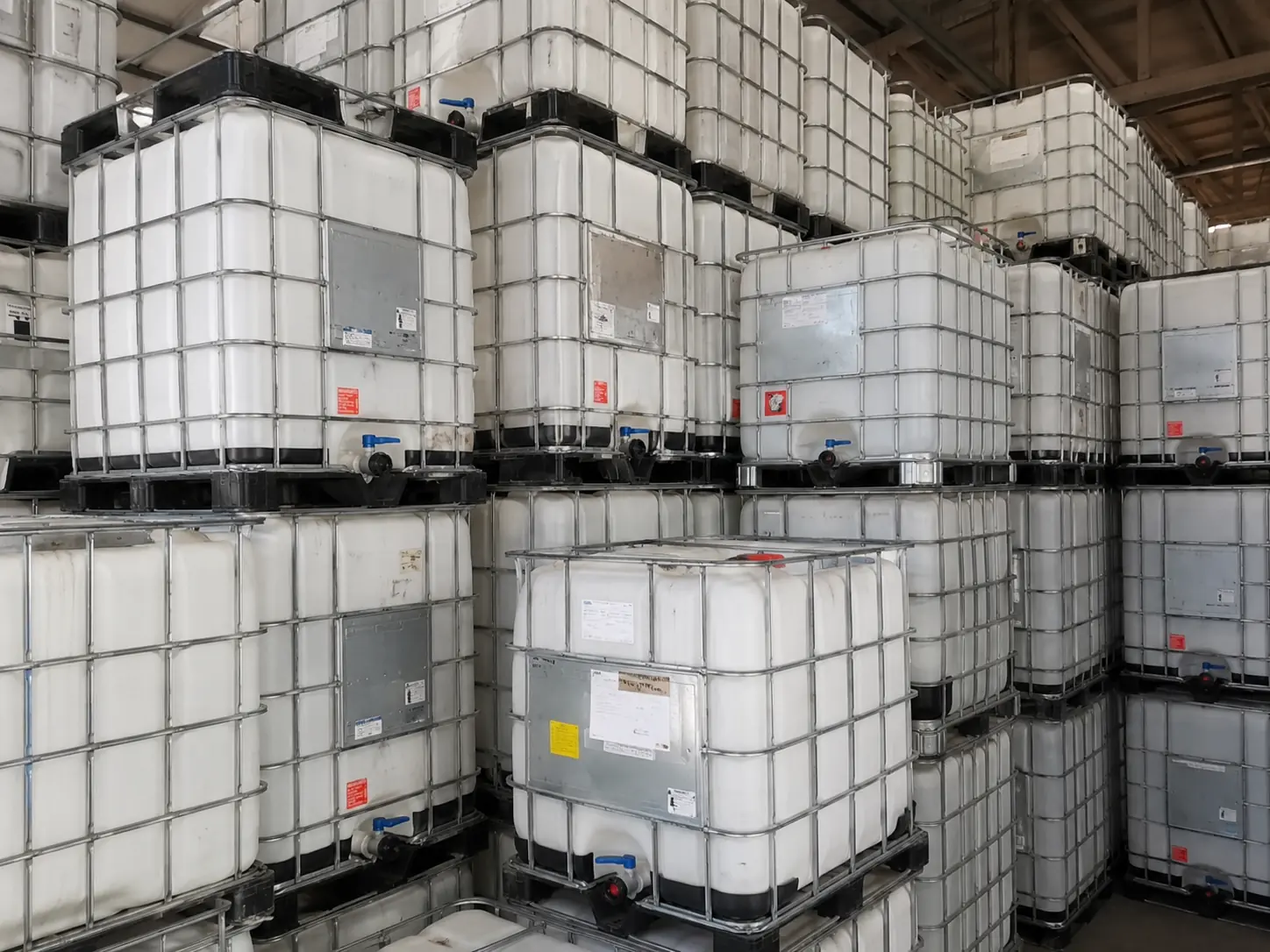
Intake on the left, wash bays in the middle, graded stock out the back. Roughly seven in ten containers that arrive here leave again as containers.
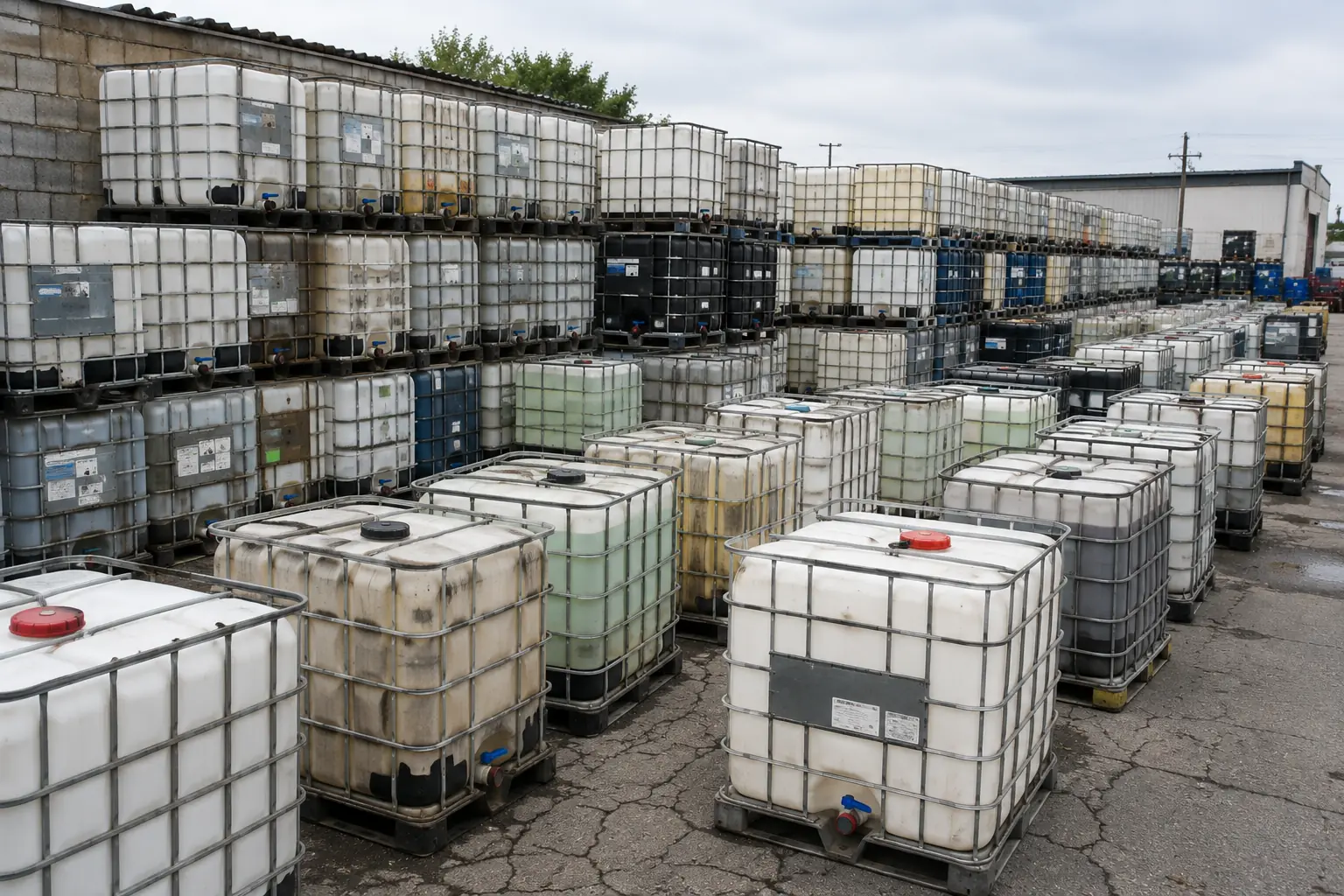
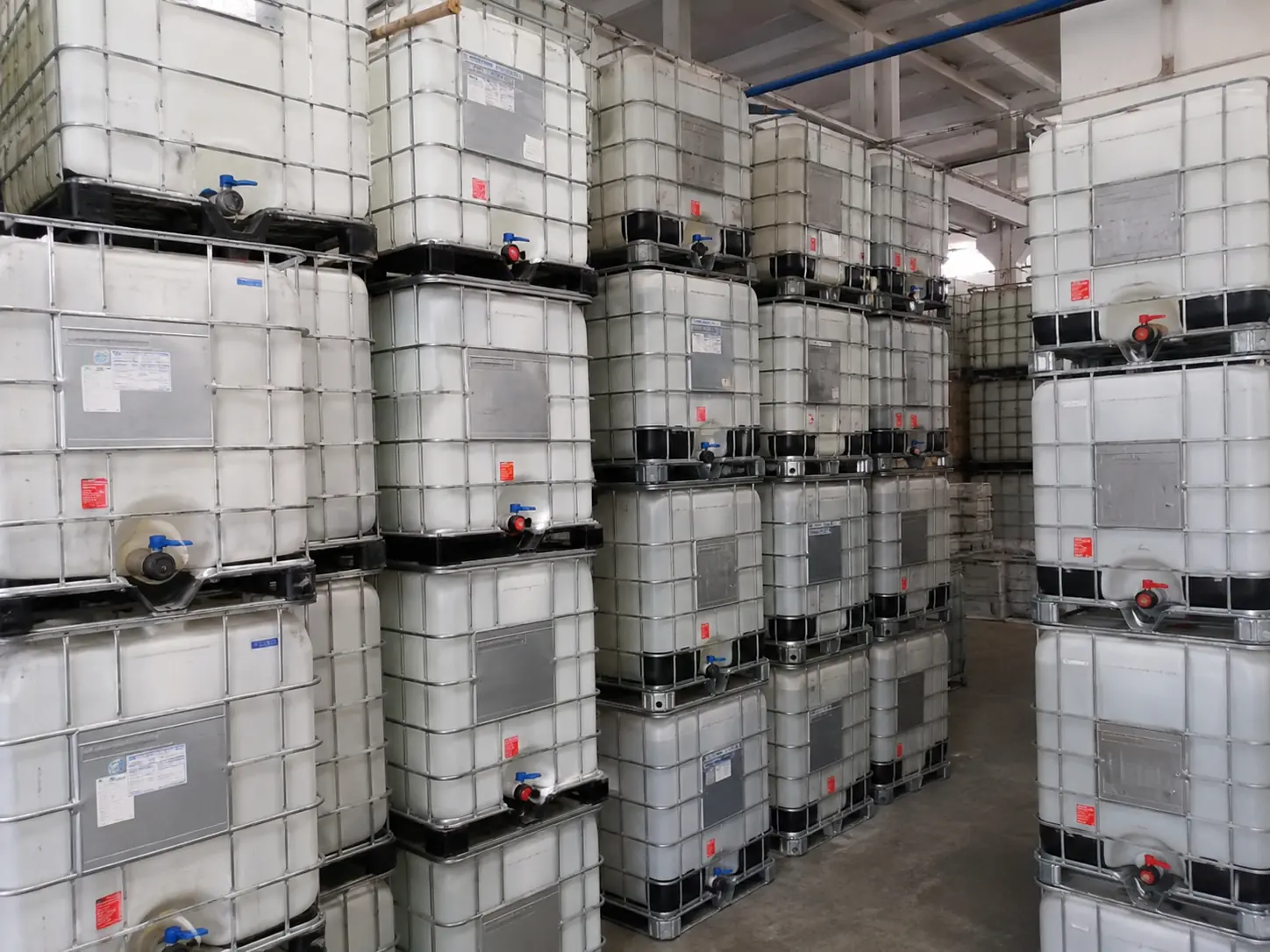
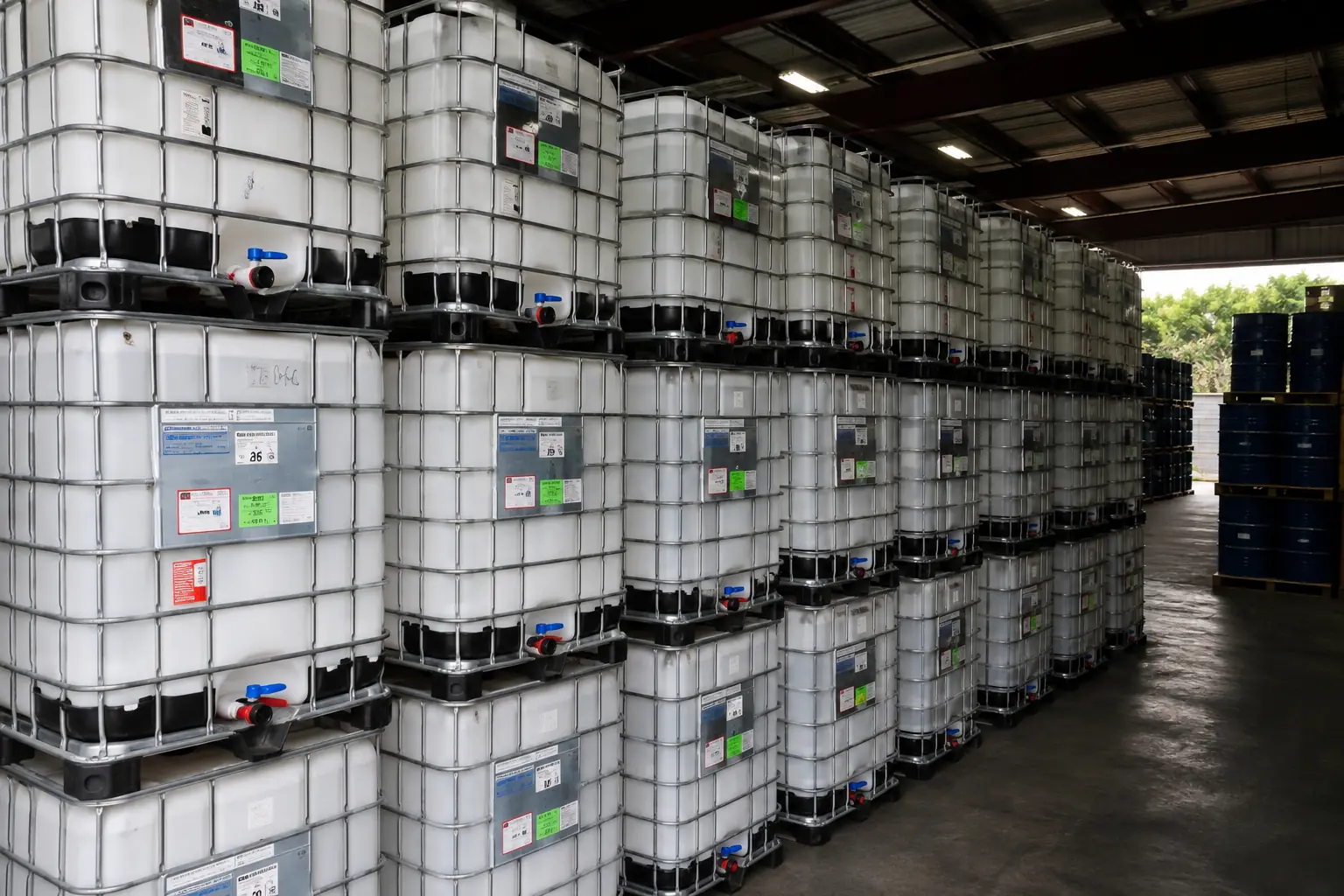
More of the yard, bay by bay, on the facility page.
Why reuse beats recycling
Recycling a tote is the fourth-best thing you can do with it.
Everyone in this trade says 'we recycle'. Recycling is the consolation prize. Here is the ladder we actually work down, in order, with what each rung saves on a 275-gallon composite unit.
- 01
Reuse it as it stands
125 kg CO₂eWash, test, reissue. The bottle and the cage both keep working. Nothing is melted, nothing is re-smelted, nothing is bought new. This is where roughly seven out of every ten totes that arrive here end up, and it is the only outcome that avoids the full embodied burden of a replacement.
- 02
Rebottle it
78 kg CO₂eThe bottle has failed but the steel is sound. A new HDPE bottle drops into the reclaimed, re-certified cage — you get virgin-bottle purity and a fresh UN mark while 42 kg of galvanised steel stays out of the furnace.
- 03
Harvest the parts
VariesA cracked bottle in a bent cage still holds a good valve, a sound lid, four usable feet and a pallet base. Selling parts keeps other people's totes alive, which is a saving that never shows up on our own tonnage report.
- 04
Granulate and smelt
46 kg CO₂eGenuinely end-of-life. The bottle is rinsed and granulated into clean HDPE regrind, the cage goes to a steel mill, hardware is separated by material. Around 94% of the mass is recovered — but you have paid the energy cost of making it all over again.
- 05
Landfill
NothingThe rung we are trying to delete. Only genuinely non-recoverable residue goes here, and every year we get that number lower. A 275-gallon tote is 1.45 cubic metres of hollow bulk that does not compact — burying one is close to the least intelligent thing you can do with it.
Figures are net of collection, washing and testing. Method and factors are on the impact calculator, and the full argument is on our environmental mission page.
Nine things we do with a tote
You have totes. Or you need totes. Either way, start here.
We sit on both sides of the same trade, which is the whole point: the tote we collect from a plant in Carlstadt on Tuesday is on a dock in Sunset Park by the following week.
What's in the yard
Six ways to buy a tote, only one of which is new.
Grades A through C, rebottled units, documented food-grade stock, spare parts, and the upcycled things a retired tote becomes when it is too tired to carry product.
The party trick
Read the stamp on the side of any tote.
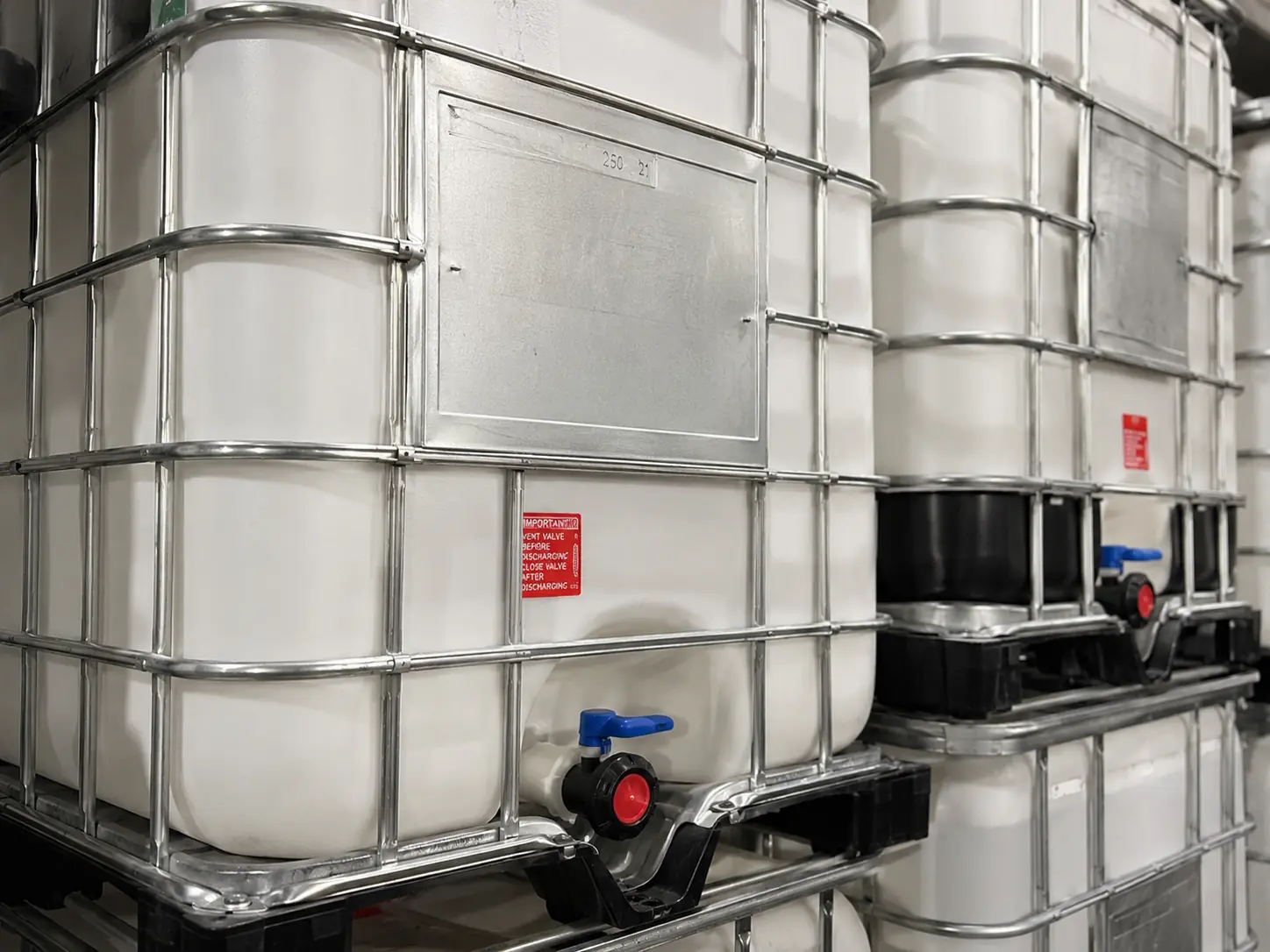
Every IBC carries a UN design-type marking that tells you what it may hold, what it is made of, when it was built, how high you may stack it and how much it may weigh full. Almost nobody can read it. Paste yours in and we'll decode every field.
Runs entirely in your browser. Nothing is sent anywhere. Full field-by-field reference on the decoder page.
Standard caged composite IBC — the tote we buy, wash and reissue every day.
Sizes & specifications
Everything is 48 by 40 until it isn't.
The 275 and the 330 share a footprint and differ only in height — which is why the 330 is usually free capacity. Here is the short version; the full chart runs to eight capacities with tare, gross mass and truck counts.
How we got there. Cradle-to-gate burden of the virgin container (17 kg HDPE at 1.9 kg CO₂e/kg, 42 kg galvanised steel at 2.2 kg CO₂e/kg) minus the real cost of bringing one back: collection, caustic wash, rinse, leak test and the return leg, about 15 kg CO₂e a unit. We round every figure down. Treat it as an order-of-magnitude guide for a sustainability report, not a verified LCA — if you need a defensible number for CDP or a Scope 3 filing, ask us for the per-shipment worksheet and we'll build it from your actual manifest.
Put a number on it
One trailer. Forty totes. Five tonnes of CO₂e.
Sustainability targets die on vagueness. Slide the counter to whatever your operation actually moves in a year and you get avoided carbon, avoided virgin resin, avoided steel, avoided landfill volume and avoided water — in units your reporting template will accept.
Need something auditable rather than indicative? We build per-shipment worksheets from your real manifests. See our own 2025 numbers.
From your dock to the next one
Six steps, and we do five of them.
- 01
You send photos
Plate, interior, valve, and the pile. Phone photos are fine — we grade off them every day.
- 02
We quote in writing
One business day, firm, per grade. No 'subject to inspection' after the fact.
- 03
We collect
Our truck, our straps, our loader. Same week across the five boroughs.
- 04
We triage
Reuse before recycle, always. Roughly seven in ten are saved at this step.
- 05
We wash, test and re-mark
20 kPa leakproofness against the serial, new valve, lid and gasket as standard.
- 06
It ships again
To the next operator who needed a tote and didn't need a new one.
The long version, with what happens in each bay, is on how we work.
Where we run
Seventy-five miles from a yard in Astoria.
Five boroughs, Long Island, Westchester and the northern New Jersey chemical corridor. Same-week collection is standard inside the city; everything else consolidates into full loads within a few days.
Straight answers
The six we get every week.
Another nineteen are on the full FAQ, and if yours isn't there, ask — we answer questions from people who have no intention of buying anything, because that is how you learn who knows the trade.
What does a used IBC tote actually cost in New York?
A Grade C 275-gallon unit fit only for static water storage starts around $95. A Grade B general-purpose tote runs $130–$180. A cosmetically clean Grade A industrial unit is $190–$240, and a documented food-grade A is $240–$285. Rebottled units — new bottle, reclaimed cage — sit at $240–$395. New is $385–$620. Prices move with the scrap steel index and with how many totes the local chemical trade has released that month.
Will you buy my empty totes, and what will you pay?
Yes. We pay roughly $18–$95 per unit depending on grade, prior contents, cage condition and how many you have. Food-grade history and an intact UN plate move the number the most. Send four photographs — plate, interior, valve, and the pile — and you get a firm written offer within one business day.
What are the dimensions of a 275-gallon IBC tote?
48 inches long by 40 inches wide by 46 inches high (1219 × 1016 × 1168 mm), on a standard 48×40 pallet footprint. Empty weight is about 130 lb with a steel pallet base, and the usual maximum gross mass marking is 2,650 lb.
Can a reconditioned tote legally carry dangerous goods?
Yes, if it has been inspected, tested and marked under a valid competent-authority approval, and its retest dates are current. Reconditioned is not a lesser legal category — it is the same container, requalified. What matters is the paperwork behind it, which is why we test against serials rather than batches.
What makes a tote food grade?
Three things together: the bottle is virgin HDPE suitable for food contact, the container's entire prior history was food-only and can be documented, and it has been cleaned on a line that never handles industrial chemistry. A tote is not food grade because it looks clean. It is food grade because someone can prove what was in it.
Is reusing a tote really better than recycling it?
Substantially. Reusing a 275-gallon composite tote avoids roughly 125 kg CO₂e against buying the equivalent new — 17 kg of virgin HDPE and 42 kg of galvanised steel that never have to be made. Granulating the same tote recovers the material but you still pay the full energy cost of remoulding and re-smelting, so the net saving drops to around 46 kg. Reuse first, recycle last.
Tell us what you've got.
Eight totes or eight hundred, food-grade or filthy, buying or selling. One form, one business day, one straight answer.