Our story · 01
We started out planning to sell these things for scrap.
Talk to the yard
Replies within one business day · Fields marked * are required
Sixteen years
How a hauling job turned into a reuse business.
Nobody sets out to become an expert in intermediate bulk containers. You get there one accidental discovery at a time.
- 2009
One truck, one bad idea that turned out to be a good one
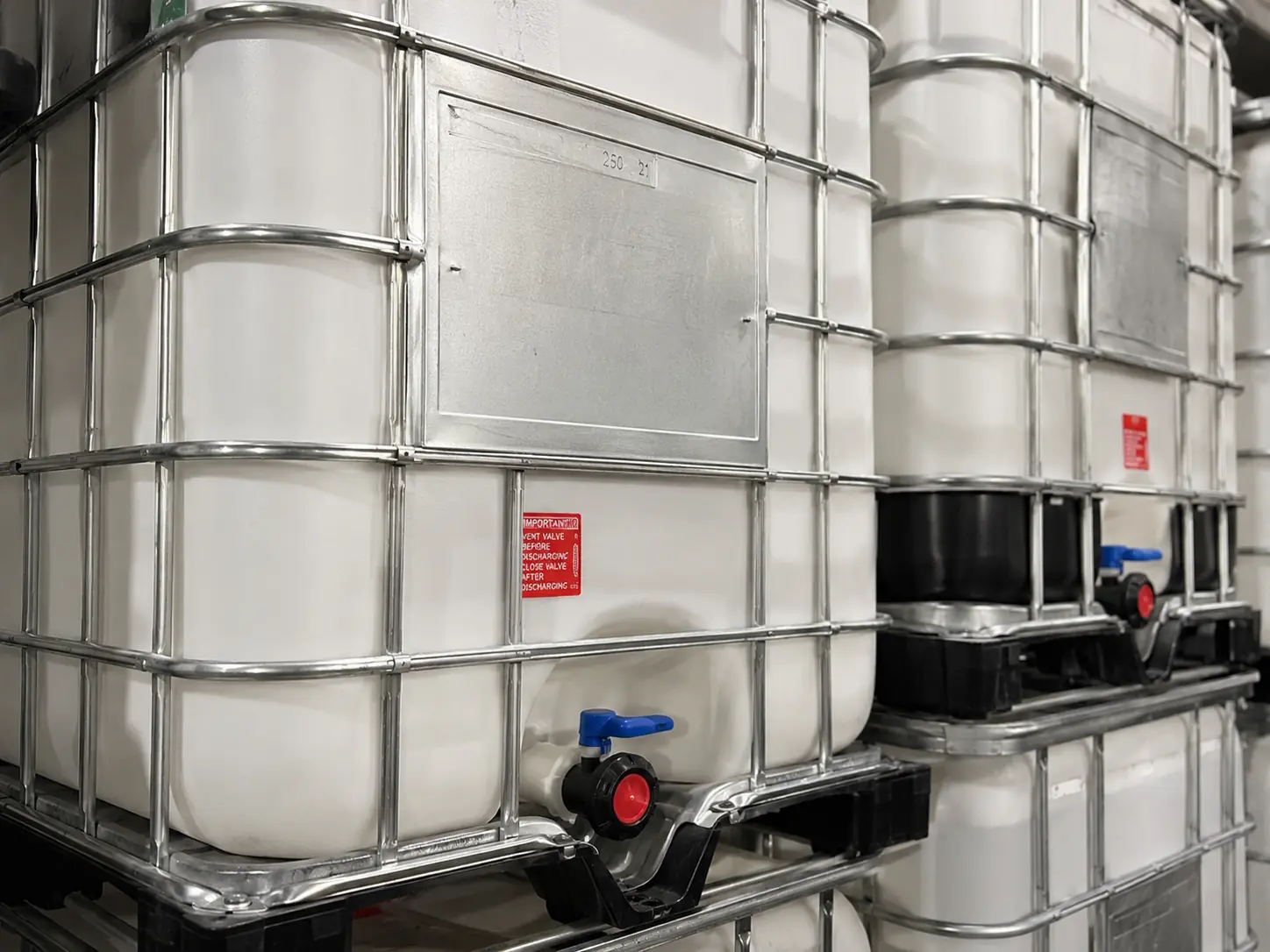
We started as a two-person hauling operation moving empty containers for a chemical distributor in Maspeth who could not find anyone to take them. The plan was to sell them for scrap. The first buyer who called wanted to reuse them, and paid four times scrap value. That call was the entire business model, discovered by accident in the first month.
- 2011
The first wash bay
Buying and reselling dirty totes has a ceiling, and we hit it fast. A single pressure washer and a captured drain turned a $40 container into a $140 one. It also taught us the lesson the whole yard now runs on: what a tote is worth is almost entirely a function of what you can prove about it.
- 2013
Astoria
We moved into the yard on 45th Street, which is still where we are. Six thousand square feet, three bays, and — at the time — a great deal more space than we needed. We filled it within two years.
- 2015
UN certification
The moment the business stopped being a scrapyard with ambitions. Certification meant we could return containers to dangerous-goods service rather than selling them for water storage, and it roughly tripled what a good tote was worth to us. It also meant testing every unit against its serial number, which we have done ever since.
- 2017
The dedicated food line
Queens and the Bronx generate an enormous amount of food-grade stock — Hunts Point alone — and almost nobody was handling it properly. Building a physically separate wash line, rather than a scheduled slot on the same equipment, was expensive and is the single decision we are proudest of.
- 2019
Rebottling
We had been scrapping sound cages for years because their bottles had failed, and it had bothered us for years. Rebottling closed that gap: new bottle, reclaimed cage, fresh mark. It is now roughly a fifth of what leaves the yard.
- 2021
Upcycling, reluctantly at first
A community garden in Astoria asked whether we had anything for raised beds. We cut down four Grade C totes that would otherwise have been granulated. Word travelled, and there is now a fabrication corner in the yard building rain harvesters, planters and wash stations from containers with no commercial life left.
- 2023
Measuring it properly
Customers began asking for avoided-emissions figures for their own reporting and we discovered we could not produce anything defensible. We built the methodology, published the factors, and now hand out per-shipment worksheets. If we are going to make environmental claims we should be able to show the arithmetic.
- 2026
Forty thousand a year
Roughly forty thousand containers now pass through the yard annually and about seven in ten go back into service rather than into a granulator. The remaining three are the ones we are still working on.
Three things we believe, which cost us money
Reuse before recycle, every time
Recycling is the fourth rung on our ladder, not the first. Granulating a sound container recovers the material and throws away the manufacturing energy already invested in it — 46 kg CO₂e saved where reuse would have saved 125. When somebody asks us to recycle a pallet of totes, our first question is whether they have actually failed inspection. Often they have not.
Sell people the cheaper thing when the cheaper thing works
The most expensive mistake in this trade is buying Grade A for a job Grade B would do. We talk customers down constantly, and we point people at reconditioned units when they have arrived asking for new. This looks like poor commercial behaviour. It is not: we buy containers back at end of life, so every container that stays in circulation comes round again.
Never guess at what was in it
A container whose prior contents nobody can name is the one thing that will get a load turned away at our gate. Not because we are precious, but because permeated chemistry is invisible, unwashable, and ends up in somebody else's product two owners later. Every unit that leaves here carries a prior-contents declaration.
By the numbers, 2025
Method and full breakdown in the 2025 impact report.
How long have you been trading?
Since 2009, when the whole operation was one box truck in Astoria. Sixteen years later the yard turns over roughly 40,000 containers a year, and it is still run from the same neighbourhood.
Are you a recycler or a reseller?
Both, in that order of preference. Reuse keeps a container whole and avoids far more emissions than shredding it, so we recondition wherever the unit allows it and recycle only when it genuinely cannot be reissued.
Why do you talk people out of buying new?
Because a reconditioned tote does the same job for a fraction of the price in most applications, and we buy containers back at end of life. Keeping them in circulation is literally how the business works.
Can I visit the yard?
Six days a week, and we would rather you did. Open the lids, put a torch inside and read the plates. For orders over twenty units we actively prefer that you inspect before committing.
Do you publish your environmental figures?
Yes, with the factors and the method alongside them so anyone can check the arithmetic. We round every component down, which means the real numbers are more likely above our published ones than below.
Come and look at the yard.
Six days a week in Astoria. Open the lids, put a torch inside, check the plates. We'd genuinely rather you saw them.