Our story · Process
Six steps, and we do five of them.
Start at step one
Replies within one business day · Fields marked * are required
Start to finish
What happens, in order.
- 01
You send four photos
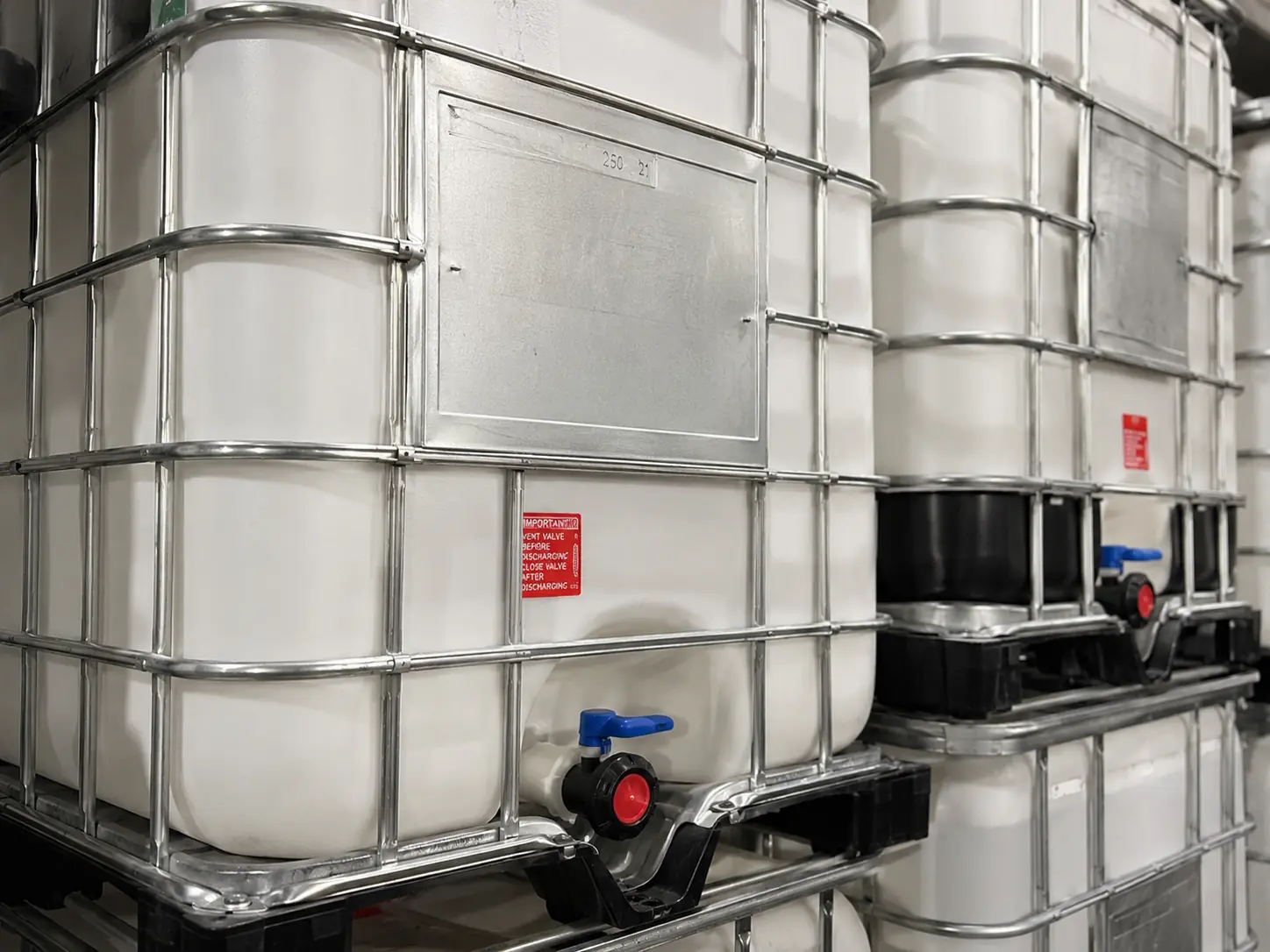
The UN plate, the interior through the lid, the valve, and the pile from a distance so we can count. Phone photos are fine — we grade off them every day.
- 02
We quote in writing
Within one business day, firm, broken down by grade. No 'subject to inspection' clauses that quietly re-price the load once the truck has left.
- 03
We collect
Our truck, our straps, our pallet jack, our driver-loader. Two-hour window rather than a whole day, and a text on approach.
- 04
We triage
Reuse before recycle. Every container is assessed for a second life before anyone reaches for a saw. Roughly seven in ten are saved at this step.
- 05
We wash, inspect, test and mark
Correct chemistry for the residue, wall thickness at four points, cage against the jig, 20 kPa leakproofness recorded against the serial, fresh plate where the design type allows.
- 06
It ships again
To the next operator who needed a container and didn't need a new one. That is the whole business in one sentence.
What makes a photo useful
We grade thousands of containers a year from phone photographs, and the difference between a useful set and a useless one is about thirty seconds of effort.
- The plate, filling the frame. Not the whole tote with the plate somewhere in it. If you can read it on your screen, so can we — and if you cannot, our decoder page explains what we are looking for.
- The interior, through the open lid, with a flash. This is the one that decides the grade. Staining, cloudiness and residue all show up; a dark hole tells us nothing.
- The valve, from the side. Shows the outlet thread, the valve type and whether there is a dust cap.
- The pile, from far enough back to count. Quantity in one location is the single biggest lever on price.
Why we do not do “subject to inspection”
It is standard in this trade and it is how sellers get hurt. A yard quotes an attractive number off photographs, collects the load, then reports that conditions were worse than they appeared and pays sixty percent of the offer. By then the containers are gone and the seller has no leverage.
If we quoted it off your photographs, we pay it. If your photographs were genuinely misleading — the interiors were not what the pictures showed — we will tell you before we load, not after.
What will stop a collection
- Product still in the containers. This is a different job and a different permit.
- Prior contents nobody can name. Undeclared residue is the one thing we turn away.
- A gate a truck cannot physically enter. Five minutes on the site check prevents this.
- Nobody on site with authority to sign the transfer note.
What you get back
- A firm written offer, itemised by grade.
- A transfer note listing every serial, issued before the truck leaves your gate.
- Payment on collection or net-15 by ACH, your choice.
- On request, the avoided-emissions figure for the load, for your own reporting.
If you are buying instead
The process runs the other way and is shorter: tell us the job, we quote two or three real options per grade, you inspect if you want to, and we deliver. Details on the buying page.
What do you need from me to start?
Four photographs and a quantity. The UN plate, the interior through the lid, the valve, and the pile from a distance. Phone photos are genuinely fine — we are reading condition and markings, not judging your photography.
How long until I get an offer?
One business day, in writing. If the photographs leave something ambiguous we will ask one question rather than quoting a range and renegotiating at your dock, which is the thing everyone in this trade hates.
Can the price change after collection?
Only if what arrives is not what was described — undeclared residue, product still in the container, or a plate that turns out to be missing. Condition differences we could reasonably have seen in the photographs are ours to absorb.
What happens to the containers after you take them?
Intake triage, then wash and leakproofness test at 20 kPa, then either reissue with a prior-contents declaration, rebottling into the same cage, or recycling if the bottle is genuinely finished. Reuse is always tried first.
Is the process the same if I am buying rather than selling?
It runs the other way and is shorter. Tell us the job, we quote two or three real options per grade, you inspect if you want to, and we deliver on the next run for your zone.
Step one takes thirty seconds.
Four photos and the quantity. You'll have a firm written offer by this time tomorrow.