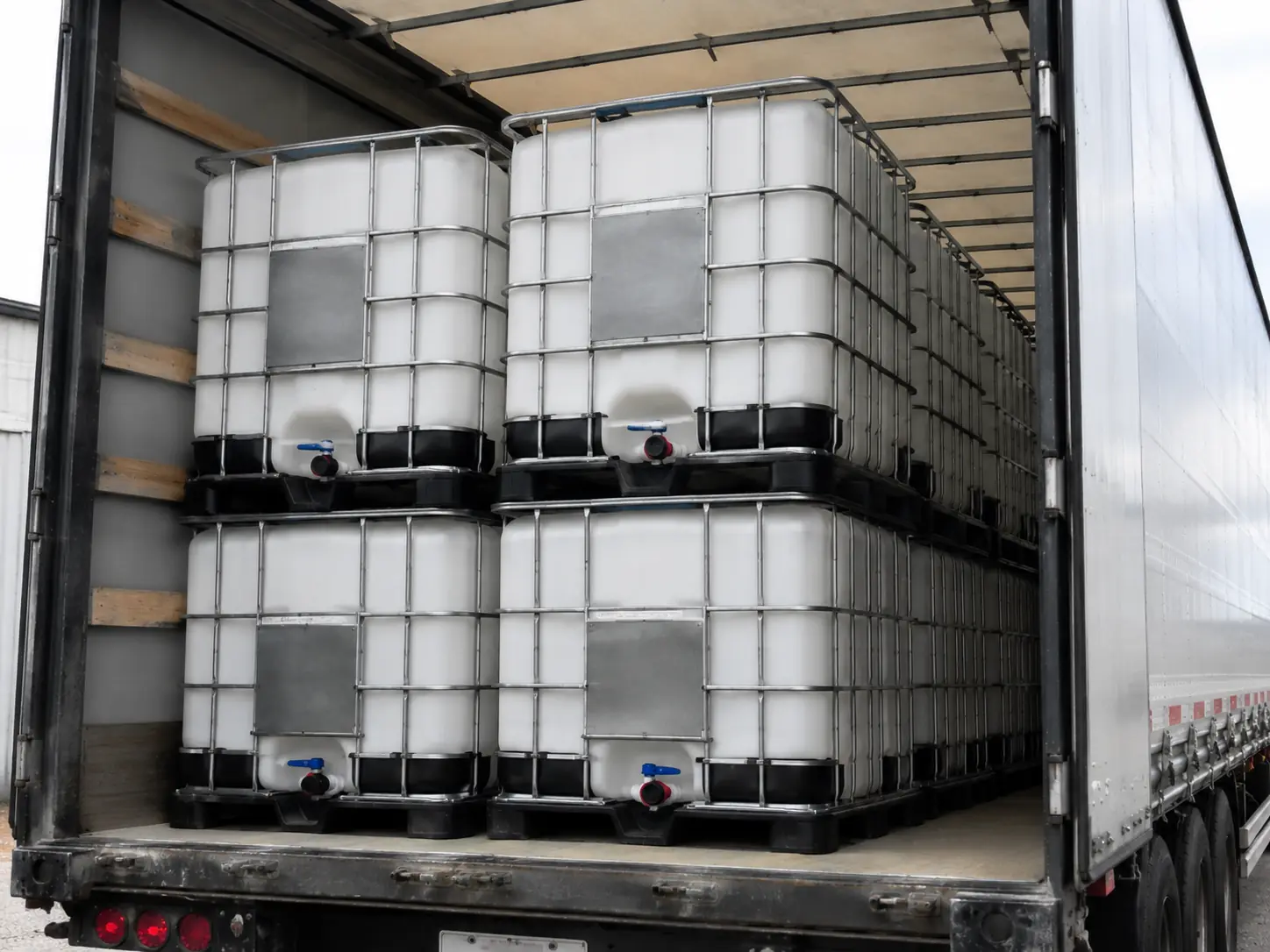
A truck that arrives and cannot load costs us a vehicle for half a day and costs you a rescheduled clearance. It happens to every haulier in this trade and it is almost entirely preventable with a short conversation before the booking is confirmed.
The four questions
1. Can a 53-foot trailer physically get in and turn around?
Not "is there room" — can it turn. A trailer needs an enormous swept path, and a yard that comfortably holds six vehicles may have no way for an articulated unit to leave without reversing onto a main road.
If the answer is no, that is fine. We send a box truck instead and take twelve containers rather than forty. What is not fine is finding out at 6 AM with a driver on the phone.
2. Is there a dock, and what height?
A standard dock is around 48 inches. Anything materially different needs a tail lift or a forklift on the ground. No dock at all is common and completely workable — it just changes the vehicle.
3. Is there a forklift, and someone certified to drive it today?
The second half of that question is the one that catches people. "We have a forklift" and "the person who drives it is on holiday until Thursday" are both true statements about the same site.
Our drivers load, and they bring a pallet jack, but a pallet jack does not lift a container into a trailer. If there is no forklift on site we bring a vehicle with a tail lift, which takes longer and holds fewer units.
4. Are the containers drained, and what were the contents?
Product still in a container stops the collection dead. So does a load nobody can characterise. Both are avoidable with a walk round the yard and one email.
The building-specific ones
Manhattan: the freight lift dimensions and the loading window the building actually permits. Brooklyn: whether the shared dock is booked by another tenant. Port-adjacent New Jersey: gate paperwork, which takes longer than anyone admits and should be built into the window rather than pretended away.
What we do with the answers
They determine the vehicle, the crew, the time of day and the realistic unit count. A site with no dock, no forklift and a tight residential street gets an early box-truck run with two people. A Hunts Point site with a real dock gets a full trailer at whatever time suits them.
We also give a two-hour window rather than a day, and text on approach. That is only possible because the survey tells us how long the job actually takes.
If something changes
Tell us. A forklift that broke on Tuesday is a different job on Wednesday, and we would much rather send a different vehicle than send the right one to the wrong situation. Nobody is annoyed by a rescheduling email; everybody is annoyed by a wasted morning.
Danny Foulkes is the yard manager at IBC Tote Recycling NY in Astoria, Queens. We publish the figures we work from — if you think one of them is wrong, tell us.