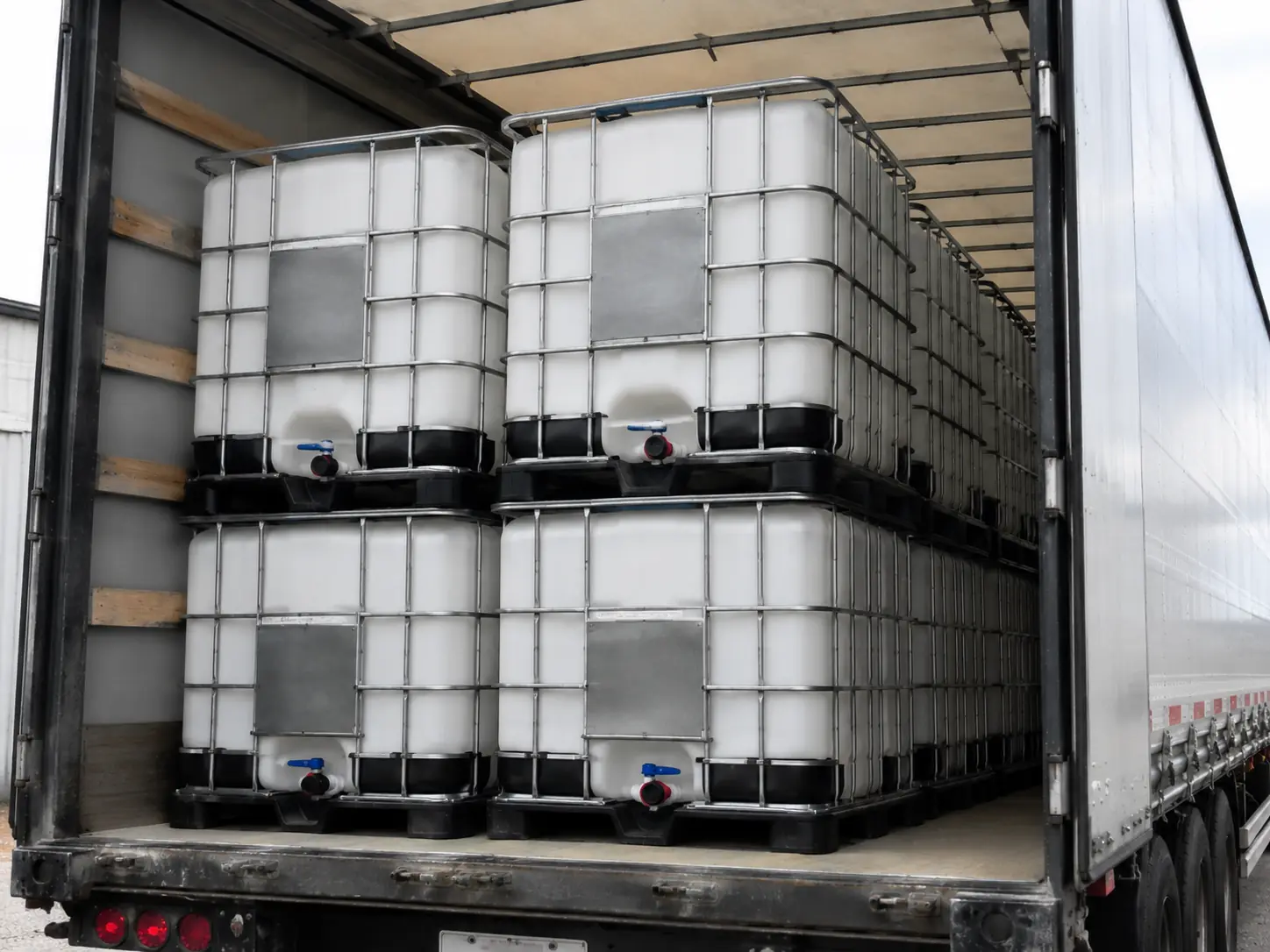
We handled 41,200 containers last year. Volume at that scale surfaces problems that a few hundred units never would. Here is what we changed, including the two changes that came from things going wrong.
1. Quarantine moved into everyone's way
It used to be tucked at the back of the yard where it was tidy and out of the traffic. Undeclared containers went there and then sat, because dealing with them was somebody's low-priority job and they were not visible.
We moved quarantine to a bay between intake and the wash line, where every forklift movement in the yard passes it. Average time a container spends in quarantine dropped from eleven days to three, without anybody being told to work faster. Making a problem physically inconvenient turns out to be a better control than a procedure.
2. Photographs at intake, not at dispatch
We used to photograph interiors at the end of the line, as part of the release pack. Sensible, except that it meant a container's condition was only recorded after we had already washed it.
When a customer queried a grading in the spring we had no record of what the container looked like when it arrived. Now every unit is photographed at intake as well, and it has settled three disputes since without an argument.
3. Two-hour collection windows
We used to give a morning or an afternoon. Customers reorganised their day around a four-hour block and were annoyed when we arrived at the end of it.
Tightening to two hours, with a text on approach, required us to actually understand how long each job takes — which is what pushed us into doing a proper site check before every booking. The site check turned out to be the more valuable change.
4. We stopped quoting lump sums
A single price for a mixed load hides the reasoning and makes it look arbitrary. Quoting per grade takes ten minutes longer and has cut our post-collection disputes to almost nothing, because the seller can see which containers were worth what and why.
It also means we can tell a seller that eight of their containers would have been worth double with a different prior-contents history, which is information they can act on next time.
5. The one that came from a genuine mistake
We shipped a pallet of Grade B containers to a customer who had ordered Grade A. Human error at dispatch, caught by the customer rather than by us. We now scan every serial at load-out against the order, which is a slightly tedious minute per pallet and has caught four further mismatches since. The uncomfortable part is that this had presumably been happening at a low rate for years and nobody noticed.
6. Publishing the carbon method
We had been quoting an avoided-emissions figure for two years without publishing how it was calculated. A customer's sustainability team asked for the derivation and we did not have it written down anywhere — we had a spreadsheet and a set of assumptions in somebody's head.
Writing it up properly took a week and forced us to revise the number down from 140 kg to 125 kg, because the original had not subtracted our own collection and washing burden. We publish it now, with the uncertainty stated.
The one we are still unsure about
We tightened the food-grade documentation requirement so that a missing prior-contents declaration downgrades a container to industrial regardless of how good it looks or what the seller says.
This is unambiguously right on principle. In practice it has cost us a meaningful volume of genuinely food-grade containers that came from real food producers whose paperwork simply got lost, and those containers are now selling at half price into industrial use.
We do not have a better answer. Any rule that admits exceptions on the strength of somebody's recollection is not a rule. But we are conscious that a principled position is quietly wasting good containers, and if anyone has solved this we would genuinely like to hear about it.
Danny Foulkes is the yard manager at IBC Tote Recycling NY in Astoria, Queens. We publish the figures we work from — if you think one of them is wrong, tell us.