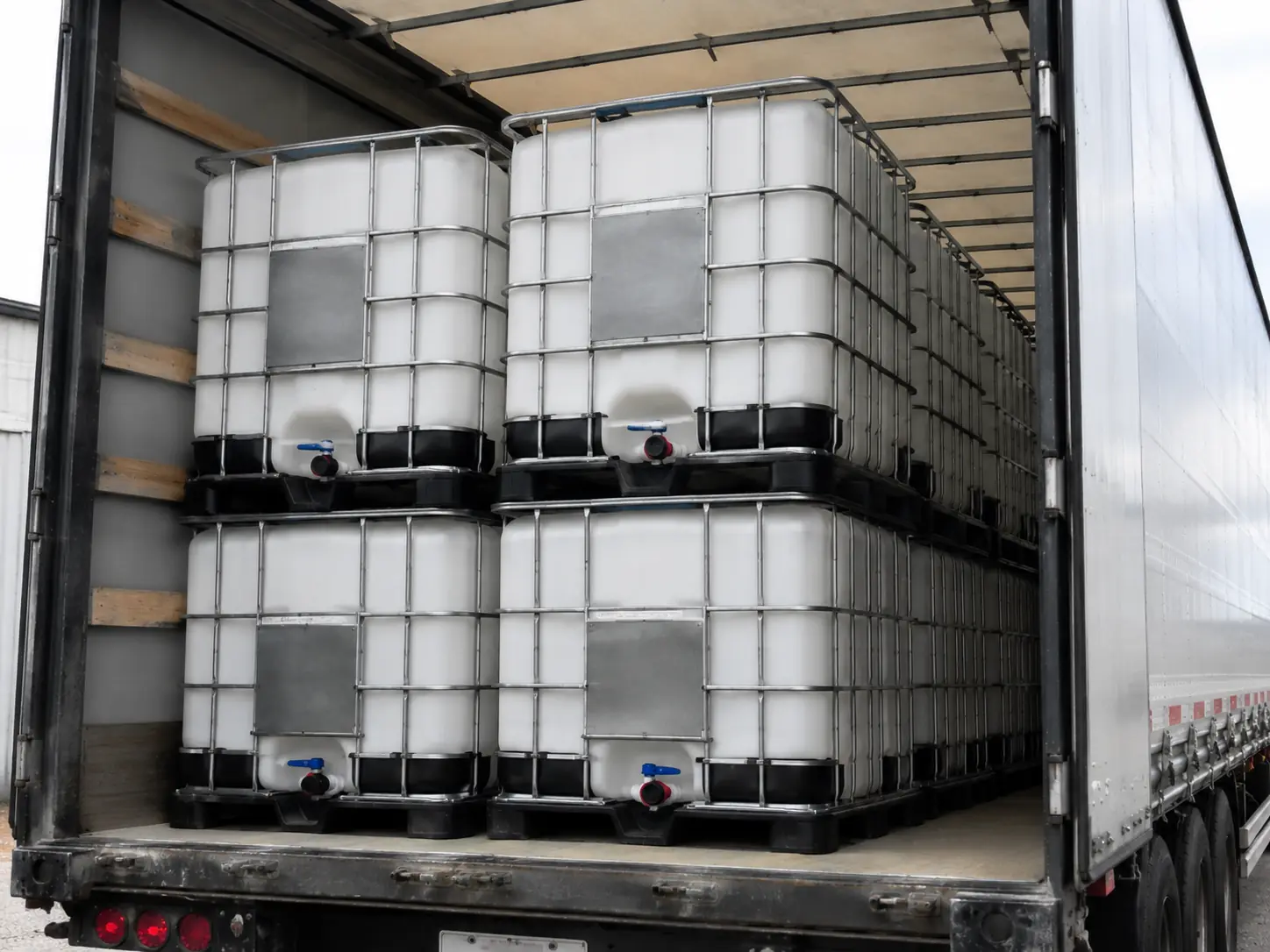
Buyers often assume used container prices track demand for containers. They partly do. But the floor under the whole market is set by something else entirely: the price of shredded scrap steel.
Why the cage sets the floor
A 275-gallon composite tote is roughly 42 kg of galvanised steel and 17 kg of HDPE. At a shredded scrap price of, say, $340 per gross ton, that steel is worth around $16 as scrap, and the HDPE regrind adds a few dollars more depending on cleanliness.
That number is the absolute floor. No container in reasonable condition sells below it, because anybody can drop it at a scrap yard and collect. When we quote $18 for a badly damaged unit, we are quoting scrap value plus a small margin for handling it.
How the move propagates
When shredded scrap moves ten percent, the floor moves with it almost immediately — scrap yards reprice weekly. The rest of the grade ladder follows, but slowly and unevenly, because it is set by container demand rather than metal content.
- Scrap and Grade C move within a week or two. They are effectively the same market.
- Grade B follows over three to six weeks, because sellers holding stock reprice when they see the floor rise under them.
- Grade A and food-grade barely move at all. Their price is set by scarcity of documented history, and there is no substitute for that at any steel price.
The practical consequence for sellers
If you are clearing a yard of tired, low-grade containers, the scrap index is genuinely worth watching — a strong steel month can add real money to a hundred-unit clearance. If you are selling twenty documented food-grade units, it is irrelevant; sell when you have them, because the food-grade market is short every month of the year.
What else moves the market
<strong>Virgin resin prices.</strong> When HDPE resin is expensive, new containers get expensive, and reconditioned units become relatively more attractive. This tightens supply of good used stock as buyers hold onto what they have.
<strong>Local industrial activity.</strong> Our supply is almost entirely determined by what the New York and northern New Jersey chemical, coatings and food trades released that month. A single large plant clearout can flood one grade for a fortnight.
<strong>Season.</strong> Spring and early autumn are the heavy clearance seasons — sites tidy up before and after summer. January and August are thin, which is when food-grade in particular becomes very hard to find.
What we do with this
We publish price bands rather than fixed prices, and we requote every enquiry rather than working from a rate card. Anyone quoting you a fixed used-container price valid for three months is either padding it heavily or about to disappoint you.
Teddy Grant is the buyer at IBC Tote Recycling NY in Astoria, Queens. We publish the figures we work from — if you think one of them is wrong, tell us.