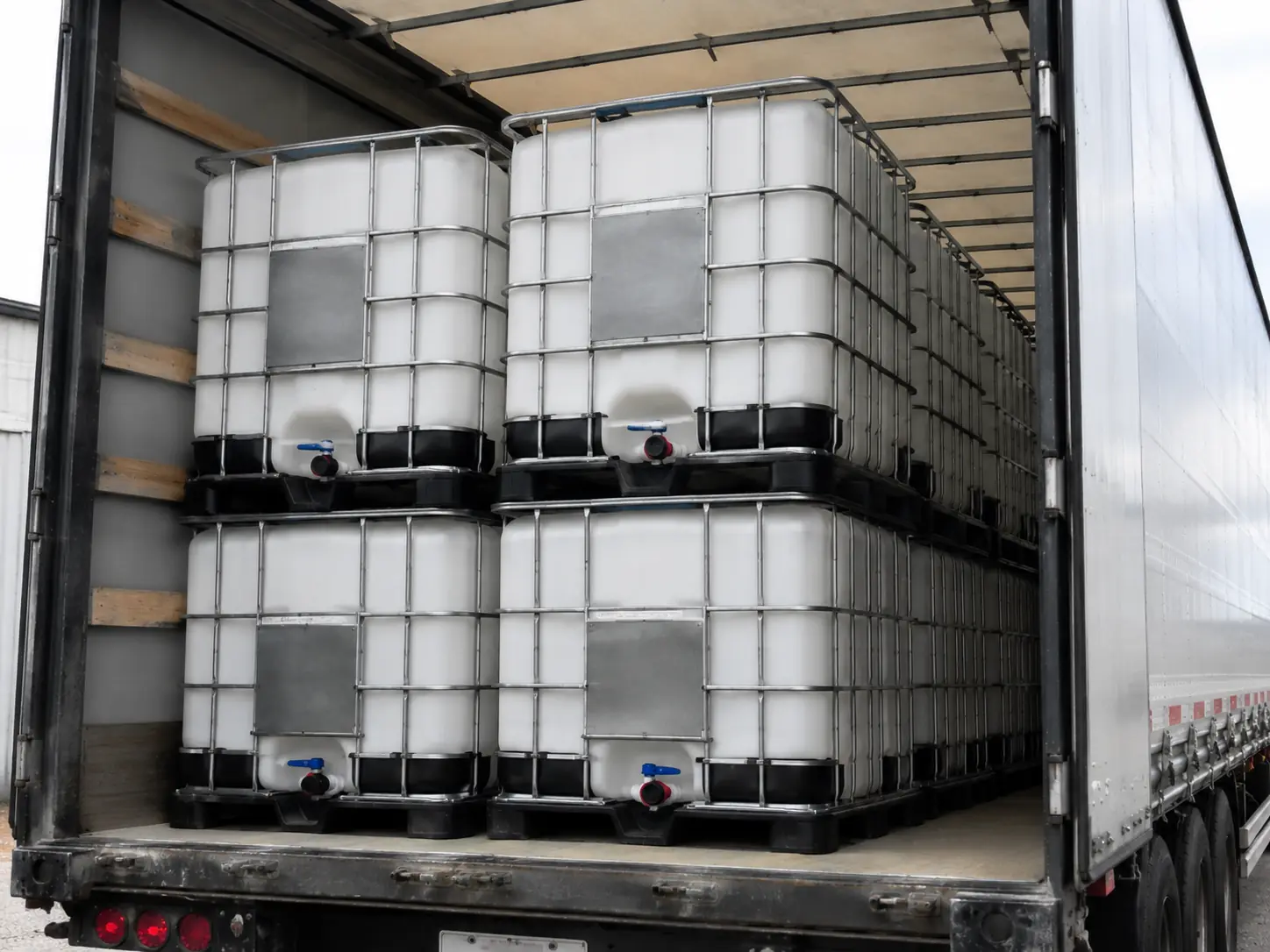
We keep records of what is wrong with every container that arrives. Over the last three years the same component tops the list every single quarter, and it is not the bottle and it is not the cage. It is the two-inch valve, which costs about twenty-two dollars.
Why the cheapest part fails first
The valve is the only part of the container that moves, the only part exposed at knee height to everything in a warehouse, and the only part anybody applies force to. It is also the part that sees the product at velocity every time the container is emptied.
The four ways it goes
Grit in the seat
Any particulate in the product — settled solids, crystallised salts, scale — sits in the valve seat when the container is drained. Close the valve on that and the seat is scored. Now it weeps, permanently, and no amount of tightening fixes a scored seat.
Prevention: flush the valve open with a little clean product or water at the end of a discharge, then close it. Ten seconds.
Cracking it open under head
Opening a butterfly valve a few degrees under a full container's static head sends product past the disc at high velocity. It erodes the seat exactly the way a partly open tap erodes a washer.
Prevention: open fully and control flow downstream, not at the valve.
UV on the handle
The handle is usually a moulded polypropylene part and it is the most sun-exposed component on the whole container. Two summers outside and it snaps at the boss the first time someone applies real force.
The pipe wrench
There is always somebody with a pipe wrench. Over-torquing the valve body into the outlet collar cracks the collar — and the collar is part of the bottle, so a three-dollar mistake becomes a bottle failure.
The single most useful habit
Fit a dust cap and keep it on. It costs about two dollars, it keeps grit out of the outlet, it makes contamination between products dramatically less likely, and it stops the valve being knocked open. Most yards do not bother and most yards have a valve problem.
What we do
Every container through our line gets a new valve, a new lid and a new gasket, without exception. Not because the old ones are always bad, but because they are cheap relative to the cost of a leak on somebody's dock, and because we cannot verify a used gasket's chemical history.
It adds roughly twenty-five dollars to the cost of reconditioning a container worth two hundred. It is the easiest decision on the whole line.
If yours has failed
Do not scrap the container. Valves, lids, gaskets, camlocks and adapters are all in stock from four dollars, and swapping a valve is a five-minute job with a strap wrench. A perished twenty-dollar part should never be the reason a sound container goes to a granulator, and it happens far more than it should.
Danny Foulkes is the yard manager at IBC Tote Recycling NY in Astoria, Queens. We publish the figures we work from — if you think one of them is wrong, tell us.