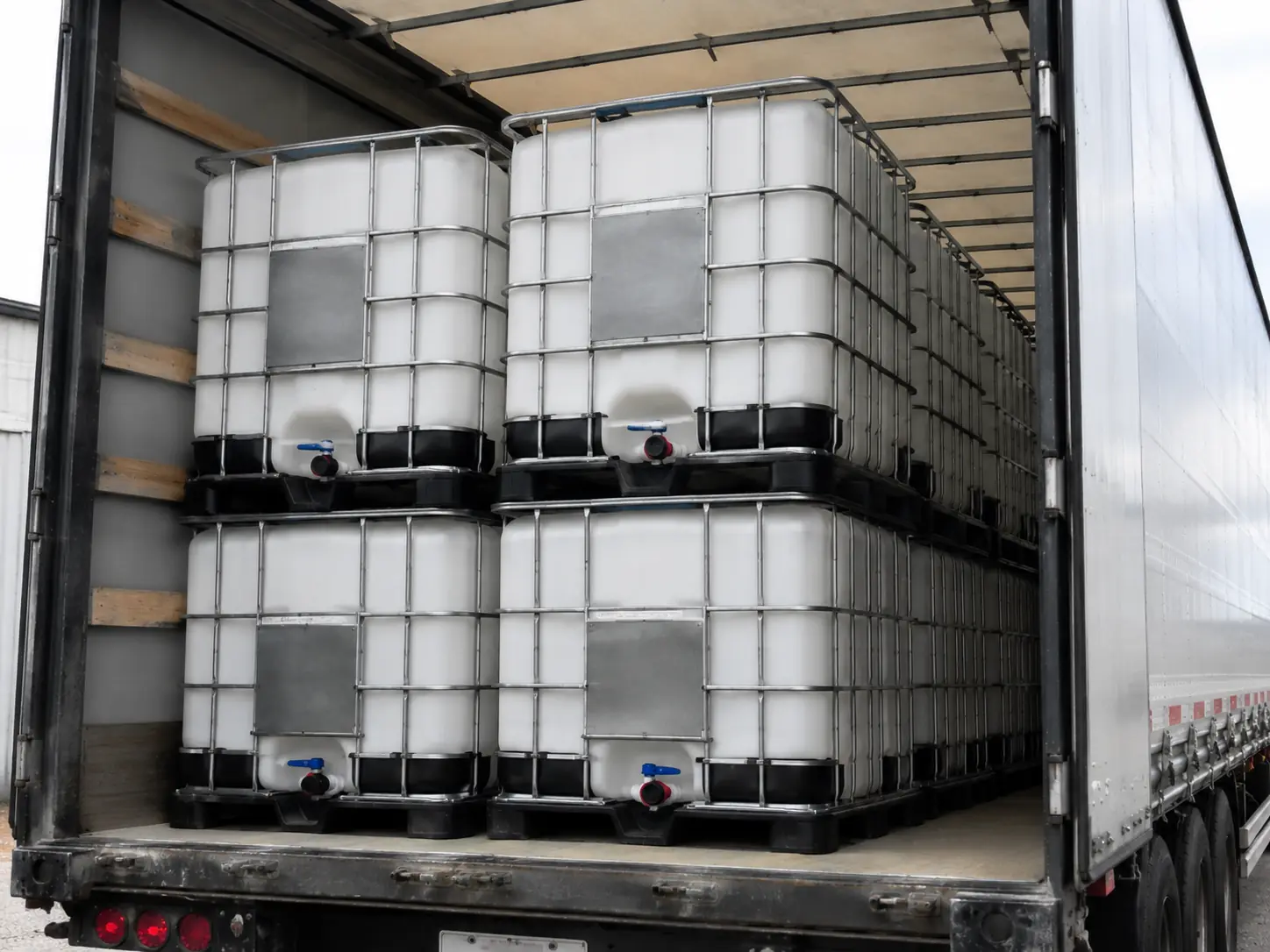
Everything we quote for a purchase comes off photographs. We are good at reading them and we still cannot read what is not there. Four shots, thirty seconds of thought, and you get a firm number instead of a cautious one.
Shot 1 — the plate, filling the frame
Not the whole container with the plate somewhere in it. Get close enough that the stamped characters fill most of the image. If you can read it on your own screen, so can we.
The plate tells us the design type, the packing group, the manufacture date and the gross-mass rating. The manufacture date alone moves the price more than almost anything else, because it drives the retest position.
If the plate is corroded, photograph it anyway at a raking angle with light across it. Partial reads are usually reconstructable.
Shot 2 — the interior, through the open lid, with flash
This is the one that decides the grade, and it is the one people skip because it feels awkward.
Open the 6-inch cap, hold the phone over the opening, and use the flash. What we are looking for: staining and its pattern, cloudiness in the wall, crystalline deposits, standing liquid, and any sign of a repair. A dark hole tells us nothing and forces us to quote conservatively.
Shot 3 — the valve, from the side
Shows the valve type, the outlet thread, whether a dust cap is fitted, and — importantly — the gasket material if it is visible. A Viton gasket is a strong signal about prior contents.
It also shows us whether the valve has been abused, which it usually has.
Shot 4 — the whole pile, from far enough back to count
Quantity in one location is the single biggest lever on price, because collection cost is most of the difference between a good offer and a poor one. Forty containers at one address is a completely different proposition from forty across five sites.
Photograph the whole stack, not the four best units at the front. If the back row is yard-stored and chalky, we would rather see it now than when the truck arrives — a load that does not match its photographs gets refused, and then everybody has wasted a morning.
What makes an offer conservative
Missing interior shots, an unreadable plate, and a close-up of three containers when there are sixty. Each of those forces us to assume the worse case, because we are the ones carrying the risk if we are wrong. Good photographs are worth real money to you.
Two things to include in the message
What was in them, with an SDS if you have one — this is not optional and it is the fastest route to a number. And whether there is a forklift on site, because that determines the vehicle and therefore the collection cost.
Send those with four decent photographs and you will have a firm written offer within one business day, and it will be the price we pay rather than a starting position.
Teddy Grant is the buyer at IBC Tote Recycling NY in Astoria, Queens. We publish the figures we work from — if you think one of them is wrong, tell us.